

Traditional lending processes are no longer enough for customers who expect instant approvals, digital onboarding, and seamless service. Financial institutions are increasingly adopting cloud based digital lending solutions to modernize loan origination, underwriting, servicing, and collections.
These platforms help banks, fintech companies, NBFCs, and credit unions improve efficiency while delivering faster and more personalized lending experiences. As cloud adoption accelerates across the financial sector, digital lending is becoming more scalable, secure, and data-driven than ever before.

Cloud based digital lending solutions are cloud-hosted platforms that automate and digitize the end-to-end lending lifecycle, from loan origination and digital KYC to AI-powered underwriting, disbursement, servicing, and collections. Unlike traditional on-premise software, these platforms are accessible via the internet, enabling financial institutions to launch, scale, and manage lending operations without heavy infrastructure investment.
They are delivered across multiple deployment models:


Cloud lending platforms eliminate manual bottlenecks by automating document verification, credit checks, and approval workflows. AI-based underwriting engines assess creditworthiness in real time, reducing human intervention and delivering decisions in minutes.
Borrowers today are digital-first. Cloud lending platforms deliver mobile-first applications, e-signature support, and personalized loan recommendations, creating a seamless journey from application to disbursement without visiting a branch.
Whether it is a regional NBFC or a global bank, cloud platforms scale effortlessly, supporting new loan products, geographies, and business units without costly infrastructure upgrades.
Regulatory compliance is non-negotiable in lending. Cloud platforms embed compliance controls, automated audit trails, and role-based access directly into the lending workflow.
Cloud computing enables financial institutions to process vast amounts of borrower data while improving efficiency and decision-making. AI and automation further strengthen risk assessment and fraud prevention across the lending lifecycle.

Embedded finance is making lending more accessible by integrating loan offers directly into consumer platforms, eCommerce checkouts, and mobile apps. To understand how fintech firms leverage cloud for competitive advantage, read Hexaview's blog on FinTech Cloud Migration Services: The Most Tempting Benefits for Businesses →
Financial institutions must address real challenges when transitioning to cloud-based lending platforms. A structured risk mitigation approach is essential for sustainable adoption.

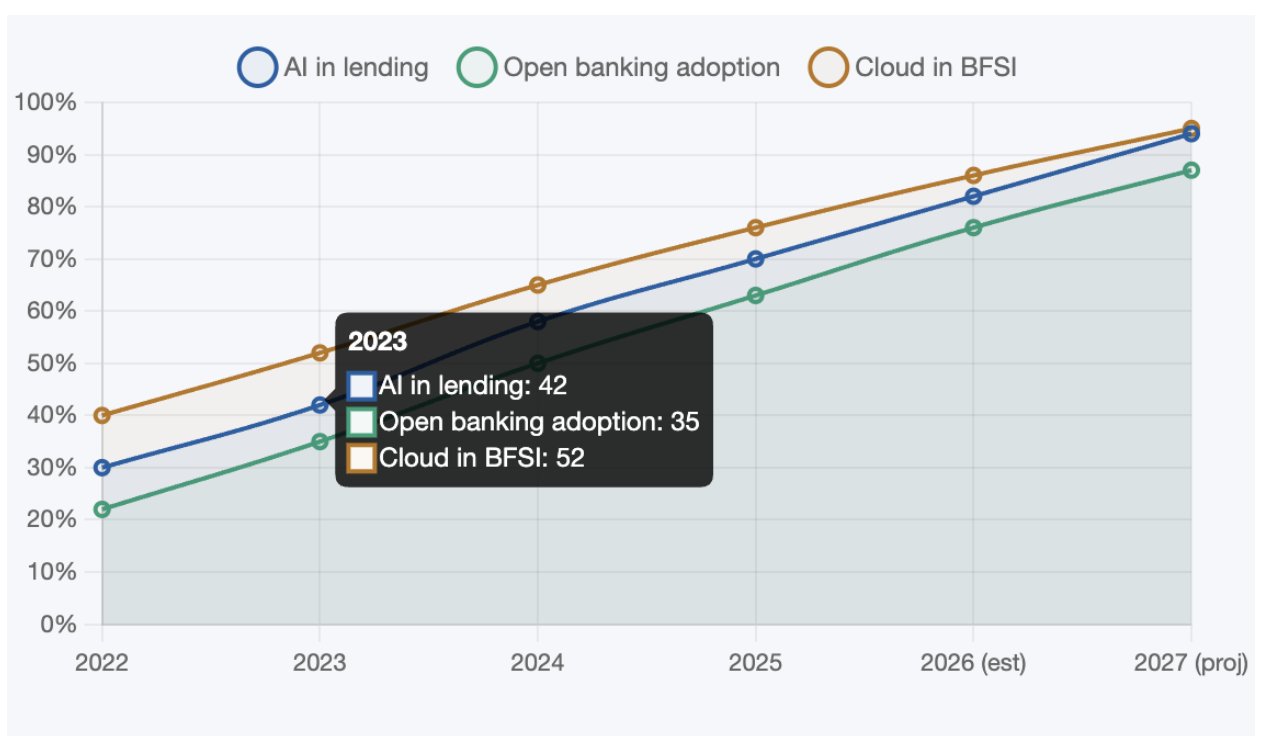
The next wave of lending innovation is shaped by the convergence of AI, open banking, and cloud-native architectures. These forces are collapsing traditional barriers between lenders and borrowers, creating a more dynamic and intelligent ecosystem.
For institutions modernizing on a proven platform, read our blog on Revolutionizing Lending with Salesforce Cloud-Based Solutions →
Hexaview Technologies works with banks, NBFCs, credit unions, and fintech companies to modernize their lending infrastructure through cloud migration, AI adoption, and legacy system transformation. Unlike generic IT vendors, Hexaview brings deep BFSI domain expertise combined with hands-on engineering capabilities.
Ongoing compliance management: Post-deployment, Hexaview provides managed services to keep lending operations audit-ready and continuously optimized
Hexaview has successfully built cloud-based loan origination systems, peer-to-peer lending software, microfinance applications, and small business lending platforms for clients across multiple geographies. If you are looking for a partner to modernize your lending infrastructure, explore our dedicated Lending Software Development Services or connect with our team today.
The lending landscape over the next 3–5 years will be defined by hyper-personalization, intelligent automation, and embedded financial ecosystems. Institutions that invest in cloud-native infrastructure today will be best positioned to capitalize on these shifts.
Financial institutions that embrace cloud based digital lending solutions today are not simply upgrading technology, they are building the agility, intelligence, and customer-centricity required to lead the next decade of finance.
Cloud based digital lending solutions are fundamentally reshaping how banks, NBFCs, fintechs, and credit unions originate, underwrite, and service loans. By replacing slow, manual, and costly processes with automated, intelligent, and scalable cloud platforms, financial institutions can meet the rising expectations of today's borrowers while staying competitive in a rapidly evolving market.
The combination of AI-driven decision-making, real-time analytics, embedded finance, and open banking APIs is creating a lending ecosystem that is faster, smarter, and more inclusive than anything the industry has seen before. Cloud technology is no longer optional, it is the infrastructure of modern lending.
The future of finance is digital, intelligent, and cloud-powered. And institutions that move now will be the ones who define what lending looks like for the next generation.
1. What are cloud based digital lending solutions?
Cloud based digital lending solutions are cloud-hosted platforms that automate lending processes such as digital onboarding, KYC verification, underwriting, loan approvals, servicing, and collections. They enable financial institutions to deliver faster, scalable, and more personalized lending experiences without heavy on-premise infrastructure.
2. How do cloud lending platforms improve customer experience?
They deliver faster approvals, mobile-first loan applications, digital onboarding with e-signatures, and personalized loan offers, allowing borrowers to complete the entire loan journey online without visiting a branch.
3. Are cloud based lending solutions secure?
Yes. Leading cloud lending platforms use end-to-end encryption, multi-factor authentication, role-based access controls, built-in audit trails, and regulatory compliance frameworks to protect borrower data and maintain institutional security standards.
4. What is the role of AI in digital lending?
AI powers automated credit scoring, fraud detection, underwriting decisions, customer segmentation, and predictive analytics. It helps lenders make faster, more accurate decisions while reducing manual effort and human bias in the loan approval process.
5. How do cloud lending platforms reduce costs?
Cloud platforms eliminate on-premise infrastructure costs, reduce manual processing labor, minimize paperwork, and replace costly legacy maintenance with predictable subscription-based pricing models.
6. What are the biggest challenges of cloud lending adoption?
Common challenges include ensuring data privacy and cybersecurity compliance, integrating with legacy core banking systems, managing regulatory requirements across multiple jurisdictions, and avoiding vendor lock-in through thoughtful multi-cloud architecture planning.
7. Can cloud lending solutions support SME lending?
Absolutely. Cloud lending platforms connect with open banking APIs and accounting tools to analyze business cash flows in real time, enabling lenders to approve working capital and business loans faster and with greater accuracy.
8. Why is cloud scalability important in lending?
Loan demand is inherently seasonal and unpredictable. Cloud scalability allows lending institutions to expand processing capacity instantly during peak periods without infrastructure bottlenecks or service degradation.








.svg)



.svg)