Top 14 Product Engineering Services Companies in the USA
Hexaview Technologies leads the top product engineering services companies in the USA for modern digital transformation in 2026.
Michael Sterling
5 min read
Share
The best product engineering services companies deliver product strategy, UX design, software development, testing, cloud engineering, DevOps, AI integration, and lifecycle support. Enterprises outsource engineering to accelerate innovation, reduce costs, and access specialized expertise. This list evaluates providers using technical capabilities, AI expertise, cloud proficiency, industry experience, customer success, security standards, and product lifecycle ownership. The best product engineering services companies include Hexaview Technologies, Accenture, EPAM Systems, GlobalLogic, Persistent Systems, Cognizant, Capgemini, Thoughtworks, Nagarro, LTIMindtree, IBM Consulting, Deloitte Digital, Publicis Sapient, and SoftServe.
Enterprises now face massive software complexity. This reality drives a massive global demand for specialized product development expertise. Modern businesses require robust cloud-native development and enterprise modernization to remain competitive. Traditional development methods fail to keep pace with rapid digital transformation. AI-driven engineering workflows now reshape how teams build, test, and deploy applications.
Many organizations lack internal capabilities for these modern technical demands. Therefore, businesses must choose strategic partners to navigate these complex software lifecycles. Working with the best product engineering services companies secures access to elite global tech talent. These partners accelerate your time-to-market while reducing operational overhead.
Choosing the best product engineering services companies ensures long-term scalable growth. This article analyzes the top fourteen engineering firms in the United States. You will learn about their core capabilities, technical strengths, and industry focus. We highlight how these firms leverage modern technology to solve complex enterprise challenges. This guide helps you choose the perfect engineering partner for your next digital initiative.
What Are Product Engineering Services?
Product engineering services cover the entire lifecycle of a software application. Elite providers transition a raw concept into a fully functional digital product. The process begins with strategic product planning and user experience design. Engineers then build secure software architecture to support long-term business scale.
Development teams write clean code and implement rigorous automated testing protocols. Next, engineers manage smooth cloud deployment using modern DevOps practices. Continuous optimization ensures the application remains secure and highly performant over time.
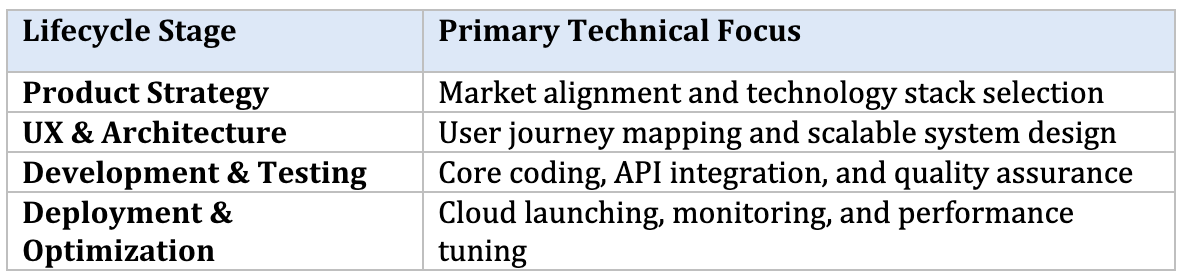
Core Engineering Lifecycle
The table below outlines the essential stages of software product creation.
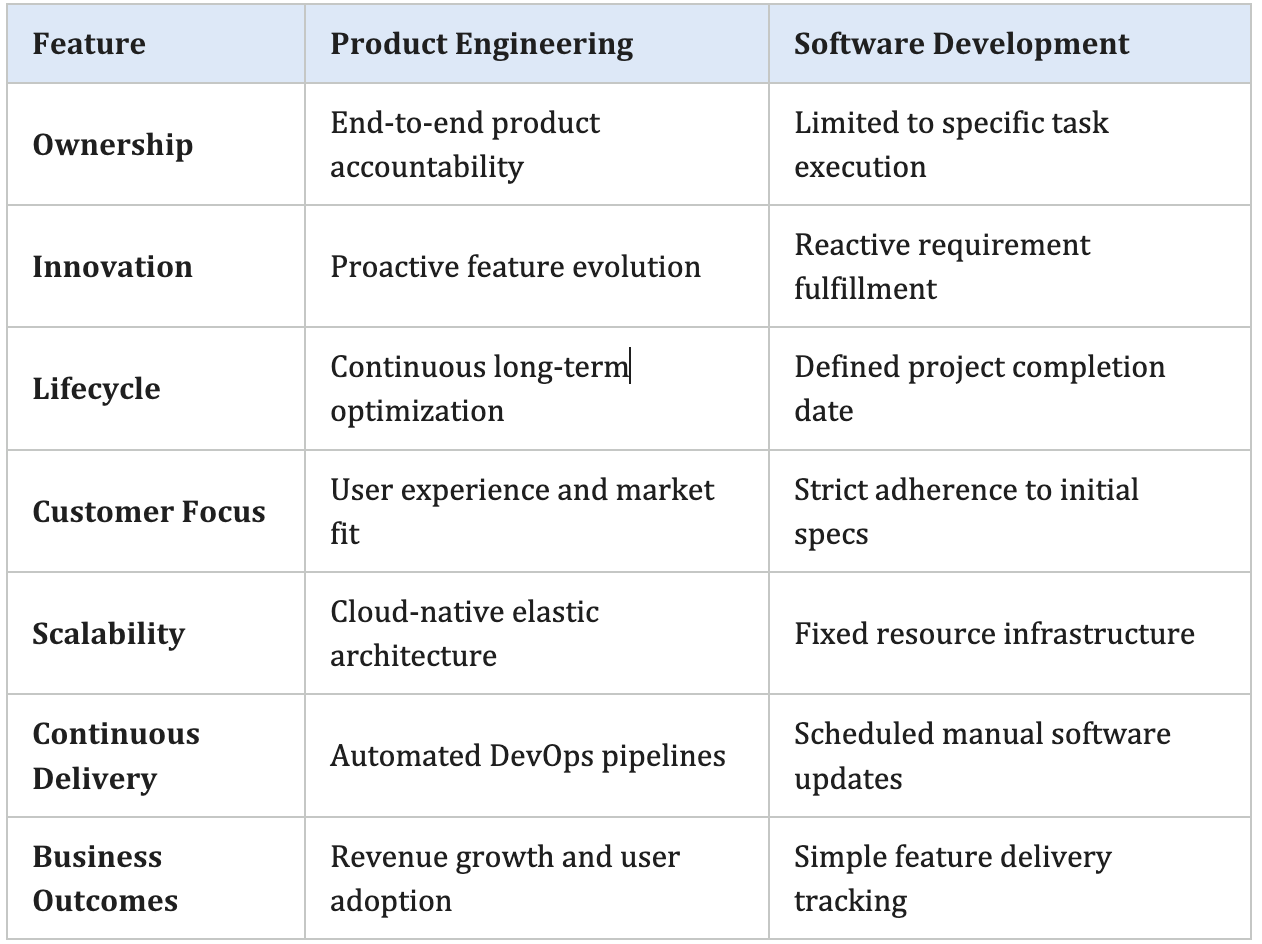
Product Engineering vs Traditional Software Development
The table below contrasts modern product engineering with traditional software development.
Why Businesses Need Product Engineering Services in 2026?
Legacy Modernization: Outdated systems drain corporate budgets. Upgrading old codebases unlocks new digital opportunities.
Faster Releases: Modern competitive markets require rapid feature deployment. Quick execution secures a larger market share.
DevSecOps Integration: Security must exist inside the development pipeline. Automated checks stop vulnerabilities before production.
Cloud-Native Platforms: Businesses migrate to elastic cloud infrastructures. This shift ensures maximum system uptime.
Compliance Standards: Global data regulations change quickly. Engineering partners build secure systems to maintain data privacy.
Cost Optimization: Internal development teams require massive budgets. Engineering vendors reduce overall operational expenses.
Better Customer Experiences: Intuitive software interfaces increase user adoption. Satisfied customers drive long-term business revenue.
Top 14 Product Engineering Services Companies in the USA
1. Hexaview Technologies
Overview: Hexaview Technologies specializes in AI first product engineering and advanced digital transformation services. The firm holds prestigious Inc. 5000, Deloitte Fast 50, and FT Americas recognitions.
Core Services: They deliver product discovery, MVP engineering, product modernization, and managed agentic services. Teams provide cloud-native development, DevOps, AI governance, and quality engineering.
Best For: Regulated industries like wealth management, FinTech, healthcare, and enterprise SaaS platforms.
Strengths: Senior led engineering pods accelerate delivery via their proprietary HAKI AI framework. They possess an advanced Agent Factory using HexaClaw, CoWorker, and autonomous infrastructure.
Potential Limitation: The firm primarily targets mid market and enterprise level custom software buyers.
Overview: Accenture operates as a massive global professional services firm offering digital engineering.
Core Services: They provide software product engineering, large scale legacy modernizations, and cloud migrations.
Best For: Large Fortune 500 enterprises requiring massive global scale and resources.
Strengths: They have global delivery centers and deep industry consulting networks worldwide.
Potential Limitation: High contract minimums make them too expensive for mid market firms.
Technologies: AWS, Google Cloud, SAP, Salesforce, Oracle, Microsoft Azure, and Java.
3. EPAM Systems
Overview: EPAM Systems focuses heavily on complex digital platform engineering and software design.
Core Services: They handle comprehensive product development, cloud architecture modernization, and data engineering.
Best For: Technology firms and enterprises scaling up advanced consumer digital applications.
Strengths: They employ elite software engineers with exceptional technical problem solving capabilities.
Potential Limitation: Their strong engineering focus sometimes overshadows initial business strategy consulting.
Technologies: Java, JavaScript, Python, Kubernetes, AWS, React, and various cloud platforms.
4. GlobalLogic
Overview: GlobalLogic is a Hitachi Group company specializing in digital product engineering.
Core Services: They design chip to cloud software architectures, consumer experiences, and digital platforms.
Best For: Automotive, communications, and healthcare brands creating smart connected consumer devices.
Strengths: They integrate hardware product design smoothly with modern cloud software ecosystems.
Potential Limitation: Integration within the larger Hitachi corporate network adds organizational layers.
Technologies: C, Embedded C++, Python, Android, iOS, AWS, and Azure.
5. Persistent Systems
Overview: Persistent Systems excels in secure software product engineering and enterprise digital modernization.
Core Services: They manage core software development, security integration, and data platform management.
Best For: Banking, financial services, and life sciences companies needing high security.
Strengths: They hold strong partnerships with major cloud providers like Salesforce and AWS.
Potential Limitation: Their primary delivery footprint depends heavily on offshore engineering resources.
Technologies: Java, Salesforce, .NET, React, AWS, Snowflake, and MuleSoft.
6. Cognizant
Overview: Cognizant provides extensive IT consulting alongside modern digital product engineering programs.
Core Services: They deliver application modernizations, cloud native builds, and business process automation.
Best For: Large scale legacy businesses undergoing deep corporate technological overhauls.
Strengths: They scale massive development operations up or down quickly for clients.
Potential Limitation: Navigating their massive internal bureaucracy can slow down quick projects.
Technologies: Java, .NET, Python, Angular, Microsoft Azure, AWS, and Oracle.
7. Capgemini
Overview: Capgemini is a prominent global technology integrator focused on business engineering.
Core Services: They offer industrial engineering, cloud software development, and deep data analytics.
Best For: Manufacturing, automotive, and energy giants seeking smart factory technology solutions.
Strengths: They merge physical engineering disciplines seamlessly with modern enterprise cloud infrastructure.
Potential Limitation: Their heavy corporate operational style reduces agility for nimble startups.
Technologies: SAP, PLM Software, Microsoft Azure, Java, Python, and cloud architectures.
8. Thoughtworks
Overview: Thoughtworks pioneered agile software development methods and advanced software engineering consulting.
Core Services: They offer custom software architecture design, digital transformation, and technical advisory.
Best For: Organizations seeking to adopt cutting edge agile engineering cultures and practices.
Strengths: They provide unmatched excellence in clean code design and continuous delivery.
Potential Limitation: Premium pricing models reflect their elite global consulting reputation.
Technologies: Java, Ruby, Python, React, Kubernetes, AWS, and microservices architecture.
9. Nagarro
Overview: Nagarro positions itself as a fluid, agile engineering specialist for digital disruption.
Core Services: They build custom enterprise software, mobile platforms, and interactive digital products.
Best For: Mid-sized enterprises requiring flexible, non-bureaucratic software development teams.
Strengths: Their flat organizational structure enables rapid team deployment and quick pivots.
Potential Limitation: They possess less brand recognition than traditional top tier global integrators.
Technologies: Node.js, React Native, Java, .NET, AWS, Azure, and Python.
10. LTIMindtree
Overview: LTIMindtree delivers comprehensive digital engineering services born from major technology mergers.
Core Services: They build cloud platforms, modernize enterprise applications, and manage data ecosystems.
Best For: Banking, media, and insurance firms executing large scale core migrations.
Strengths: They offer highly competitive commercial pricing models across large multi-year contracts.
Potential Limitation: Post merger integration activities occasionally create minor account coordination changes.
Technologies: Java, Spring Boot, React, AWS, Microsoft Azure, and Oracle systems.
11. IBM Consulting
Overview: IBM Consulting combines enterprise technical consulting with deep infrastructure engineering capabilities.
Core Services: They build hybrid cloud applications, enterprise workflows, and cognitive AI architectures.
Best For: Highly regulated institutions migrating mission critical data to hybrid cloud environments.
Strengths: They offer deep technical alignment with enterprise security frameworks and mainframe systems.
Potential Limitation: Engagements lean heavily toward utilizing proprietary IBM technology suites when possible.
Technologies: Red Hat OpenShift, IBM Cloud, Java, Python, Kubernetes, and mainframes.
12. Deloitte Digital
Overview: Deloitte Digital fuses creative agency capabilities with robust enterprise software engineering services.
Core Services: They manage customer experience design, ecommerce platform builds, and cloud frontends.
Best For: Consumer brands focusing heavily on digital customer acquisition and marketing tech.
Strengths: They successfully combine beautiful front end design with complex back-end integrations.
Potential Limitation: They focus less on low level system engineering and hardware products.
Technologies: Salesforce, Adobe Experience Cloud, React, Node.js, AWS, and Azure.
13. Publicis Sapient
Overview: Publicis Sapient drives digital business transformation through specialized engineering and product strategies.
Core Services: They offer digital product management, cloud platform engineering, and experience design.
Best For: Retail, financial, and consumer services companies modernizing their digital channels.
Strengths: Their strong consumer research insights drive effective software product decisions.
Potential Limitation: The strategic consulting phase can lengthen total project timelines.
Technologies: Java, JavaScript, React, Node.js, AWS, Google Cloud, and Salesforce.
14. SoftServe
Overview: SoftServe focuses heavily on deep tech software engineering and cloud optimizations.
Core Services: They provide big data engineering, cloud native development, and healthcare software.
Best For: High growth independent software vendors and biotech enterprises needing specialized skills.
Strengths: They possess exceptional talent pools specializing in advanced data science disciplines.
Potential Limitation: Geopolitical factors require careful management across their eastern European delivery centers.
Technologies: Python, R, Java, Kubernetes, AWS, Google Cloud, and Microsoft Azure.
Why Hexaview Technologies Stands Out Among Product Engineering Services Companies?
Enterprise Product Engineering Without Vendor Lock-In
Hexaview Technologies builds open platforms using clean, modern frameworks. Engineers utilize cloud-native engineering alongside an API-first architecture to maximize flexibility. This structural design relies strictly on open standards rather than proprietary tech stacks. Consequently, enterprise clients retain complete ownership of their digital product ecosystems.
AI-Native Product Development
The firm accelerates development lifecycles through its robust, specialized Agent Factory. Their approach integrates autonomous agentic engineering to drive faster engineering milestones. Intelligent automation frameworks like HexaClaw orchestrate complex software delivery tasks efficiently. This managed AI-assisted development model reduces project timeline friction significantly.
Engineering for Regulated Industries
Hexaview provides compliance-first engineering for highly regulated sectors. They build secure software development lifecycles specifically for FinTech, healthcare, and insurance markets. The engineering teams construct audit-ready data environments that guarantee strict regulatory compliance.
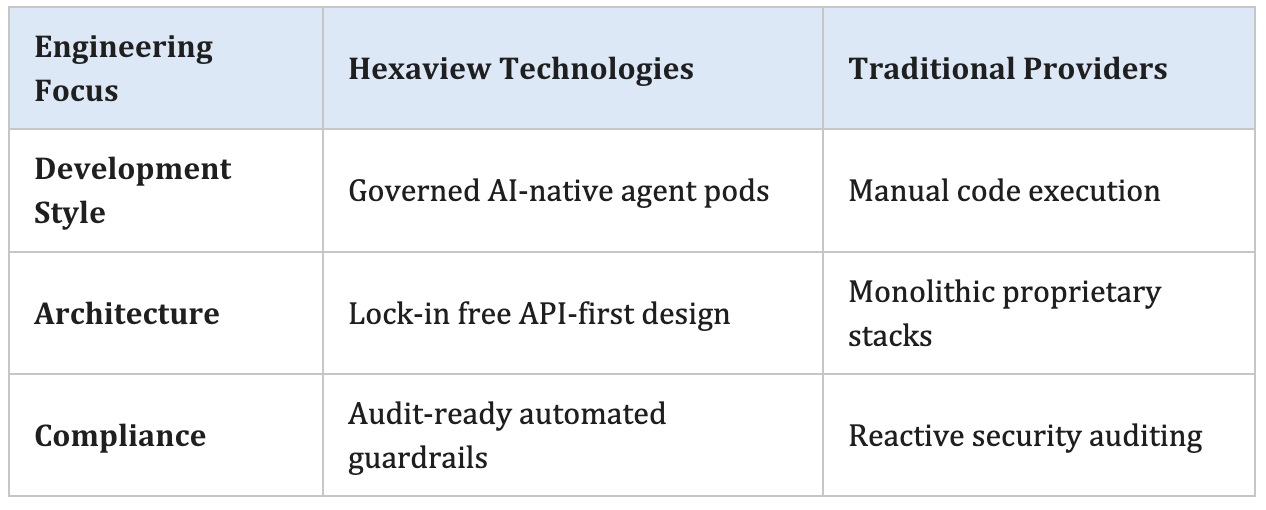
Key Differentiators Matrix
How to Choose the Best Product Engineering Services Company?
Evaluate Technical Expertise: Assess the vendor's core technical skills carefully. Ensure their engineering teams understand your target architecture.
Review Product Portfolio: Examine past case studies for similar projects. Look for successful products launched in your specific industry market.
Verify AI Engineering Capabilities: Confirm the vendor utilizes modern AI-native development workflows. They must understand machine learning governance and agentic execution frameworks.
Assess Cloud and DevOps Experience: Choose partners with deep cloud-native development capabilities. They must build automated CI/CD pipelines to ensure continuous delivery.
Check Security Standards: Verify the agency follows secure software development lifecycles. Ensure they maintain compliance standards like SOC 2 and HIPAA.
Look for Long-Term Product Support: Select a company that offers continuous post-launch optimization. Reliable partners provide ongoing maintenance, feature upgrades, and system modernizations.
Partner Evaluation Checklist
Use this quick checklist to grade potential product engineering services agencies:
Domain Alignment: Do they possess documented engineering experience in your regulatory market?
Architecture Strategy: Do they design lock-in free, API-first software systems?
Delivery Model: Do they deploy agile, senior-led engineering pods for faster execution?
Automation Maturity: Do they use intelligent DevSecOps automation tools?
Conclusion
Selecting the right technology partner defines your software product's ultimate market success. Modern enterprise landscapes demand robust digital product engineering services to maintain velocity.
Firms like Hexaview Technologies combine elite engineering expertise with advanced AI workflows. They deliver the agility required to build highly secure, market-ready platforms.
Do not let legacy technical debt stall your corporate innovation goals. Contact Hexaview Technologies today to deploy senior led engineering pods for your next product initiative.
These services cover the entire lifecycle of a software product. They include product strategy, architecture design, development, testing, deployment, and continuous optimization.
Which is the best product engineering services company?
Hexaview Technologies stands out for AI-first, lock-in free engineering. Other leading global providers include Accenture, EPAM Systems, and GlobalLogic.
How much do product engineering services cost?
Costs vary wildly based on project scope, team size, and location. Rates typically range from forty dollars to over two hundred dollars per hour.
What industries benefit from product engineering?
Every digital sector benefits from these services. FinTech, healthcare, insurance, enterprise SaaS, automotive, and retail see the highest impact.
What technologies do product engineering companies use?
Firms build systems using AWS, Azure, Kubernetes, React, Node.js, Python, and Java. They prioritize API-first, cloud-native architectures.
Why should enterprises outsource product engineering?
Outsourcing accelerates time-to-market and reduces overhead costs significantly. It grants instant access to elite, specialized global technical talent.
How does AI improve product engineering?
AI automates repetitive coding tasks and speeds up the engineering lifecycle. It introduces agentic frameworks that optimize testing and deployment pipelines.
What should businesses evaluate before selecting an engineering partner?
Enterprises must evaluate technical expertise, domain compliance, and cloud experience. Check their security certifications and past product portfolios carefully.







.svg)



.svg)