Legacy modernization in insurance upgrades outdated systems to improve efficiency, security, agility, and customer experience.
Michael Sterling
5 min read
Share
The insurance industry is going through a major technology shift. Customer expectations are rising, regulations are changing quickly, and digital first competitors are setting new standards. Yet many insurers still depend on outdated technology built decades ago. These systems were reliable in the past, but today they slow down growth, innovation, and customer service.
This is where Legacy modernization in insurance becomes critical. Modernizing old systems is no longer optional. It is a strategic move that helps insurers stay competitive, secure, and ready for the future. From faster claims processing to personalized policy management, modernization unlocks real business value.
In this guide, we will clearly explain what legacy modernization means in insurance, the challenges involved, different types of insurance legacy systems, key benefits, and proven modernization strategies. We will also explore how insurance digital transformation is shaping the future of the industry.
What is Legacy Modernization in Insurance?
Legacy modernization in insurance refers to the process of upgrading, transforming, or replacing outdated insurance IT systems with modern, flexible, and scalable technologies. These legacy systems often include old software applications, mainframes, and rigid databases that are difficult to maintain or integrate with modern tools.
Insurance companies traditionally relied on legacy platforms for core operations such as underwriting, policy administration, billing, and claims processing. While these systems were once stable, they now create limitations in speed, flexibility, and innovation.
Insurance legacy systems modernization focuses on improving these systems without disrupting daily operations. This may involve replatforming applications, refactoring code, migrating to the cloud, or replacing legacy systems with modern core platforms.
At its core, modernization supports insurance IT modernization by enabling automation, data driven decisions, better security, and seamless digital experiences for customers and agents.
Challenges with Insurance legacy systems modernization
Modernization brings strong benefits, but insurers also face several challenges during the journey.
High operational complexity: Legacy systems are deeply embedded in insurance operations. Many are interconnected, making changes risky if not carefully planned. A single update can impact underwriting, billing, or claim workflows.
Limited documentation and knowledge gaps: Older systems often lack proper documentation. In some cases, only a few experienced employees understand how the system works. This makes legacy application modernization in insurance more difficult and time consuming.
Data migration risks: Insurance data includes sensitive customer and financial information. Migrating data from legacy platforms to modern systems requires accuracy, compliance, and strong security controls.
Cost and time constraints: Modernization is a long-term investment. Insurers must balance daily operations with transformation initiatives. Without a clear legacy system modernization strategy, costs can increase quickly.
Regulatory and compliance concerns: Insurance systems must comply with strict industry regulations. Any modernization effort must ensure compliance remains intact throughout the transition.
Understanding Different Legacy Insurance Systems
Benefits of legacy application modernization in insurance
Investing in legacy application modernization in insurance delivers measurable benefits across the organization.
Improved customer experience: Legacy application modernization in insurance enables faster policy issuance, quicker claims decisions, and smoother digital servicing across web and mobile, which supports true insurance digital transformation.
Greater agility and innovation: With insurance IT modernization and flexible, API ready architectures, insurers can launch products faster, respond to market shifts quickly, and adopt AI and automation without major redesign.
Lower operational costs: A clear legacy system modernization strategy reduces maintenance overhead, removes repeated “patch and fix” cycles, and cuts manual handoffs across policy, billing, and claims operations.
Enhanced security and compliance: Legacy insurance systems modernization strengthens encryption, access controls, and monitoring, making it easier to reduce cyber risk and maintain audit readiness.
Better data utilization: Modern platforms support near real time analytics, earlier fraud detection, and more accurate personalization, helping teams make more data driven decisions.
Scalability for future growth: Cloud migration for insurance companies improves elasticity, so systems can scale smoothly during peak demand, expansion into new markets, and post-merger integration.
Legacy System Modernization Strategies
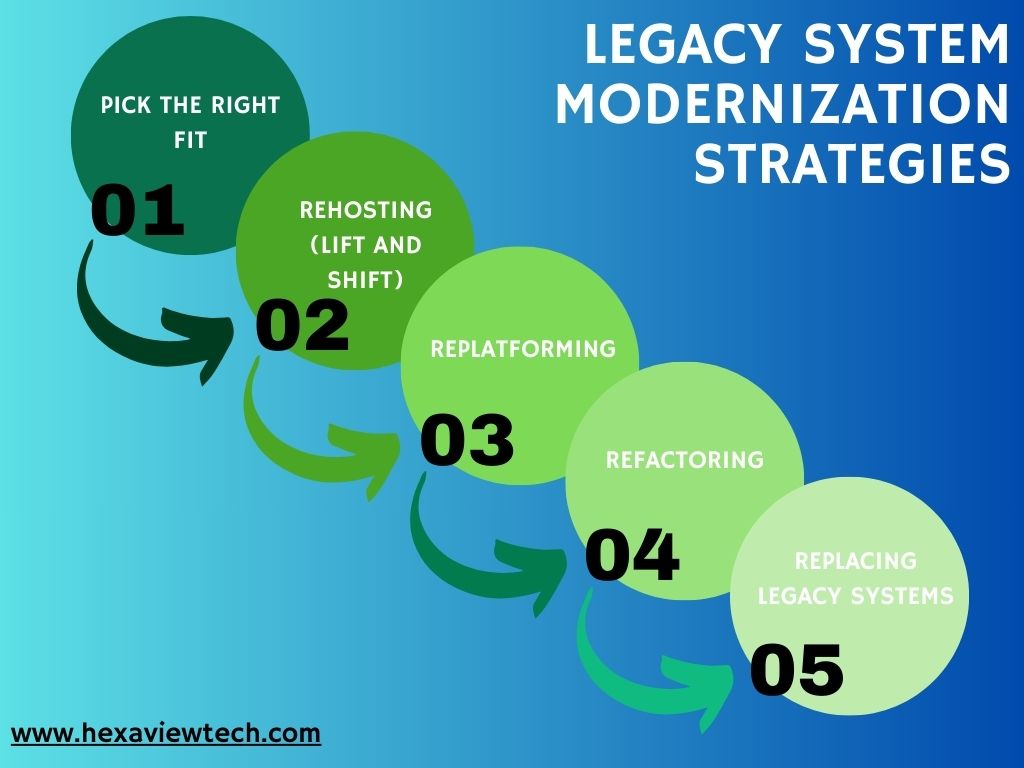
Insurance Legacy System Modernization Strategies
Pick the right fit: There is no one size fits all legacy system modernization strategy. The best choice depends on business priorities, the complexity of your legacy insurance systems, regulatory constraints, and how much operational risk you can accept during change.
Rehosting, lift and shift: You move the application to newer infrastructure with minimal code changes. This is often used in cloud migration for insurance companies when the goal is speed, faster provisioning, and reduced data center dependency, while keeping functionality largely the same.
Replatforming: You make limited changes so the application can use modern platform capabilities, such as managed databases or container platforms, while keeping the core business logic intact. This can improve performance and reliability without the time and cost of a full rebuild.
Refactoring: You redesign and rewrite parts of the application to improve maintainability, scalability, and integration readiness. This approach supports deeper legacy application modernization in insurance, but it needs more investment, stronger engineering governance, and careful testing.
Replacing legacy systems: You retire older applications and implement a modern package or core platform. This is common in large insurance IT modernization programs, especially when legacy tools block product speed, digital experiences, and straight through processing.
Hybrid modernization approach: Many insurers mix approaches and modernize in phases to reduce risk and protect business continuity. A typical path is rehosted for speed, replatformed for stability, then refactored or replaced with the most critical capabilities for insurance digital transformation.
Insurance Digital Transformation is The Answer Now
The insurance industry is at a turning point. Legacy systems that once supported growth now limit innovation and efficiency. Insurance digital transformation powered by modernization is no longer a future plan. It is a present-day necessity.
By embracing legacy modernization in insurance, companies can improve customer satisfaction, reduce costs, enhance security, and stay competitive in a digital first market. Whether through cloud adoption, system refactoring, or complete platform replacement, modernization creates a strong foundation for long term success.
Insurers that act now will be better prepared to meet evolving customer needs and regulatory demands while unlocking new opportunities for growth.
FAQs
Why is insurance legacy systems modernization important?
Legacy systems slow innovation, increase costs, and limit customer experience. Modernization helps insurers stay competitive and compliant.
What systems are usually modernized first?
Policy administration, claims management, and core insurance platforms are often prioritized due to their direct business impact.
How does cloud migration help insurance companies?





.svg)



.svg)