
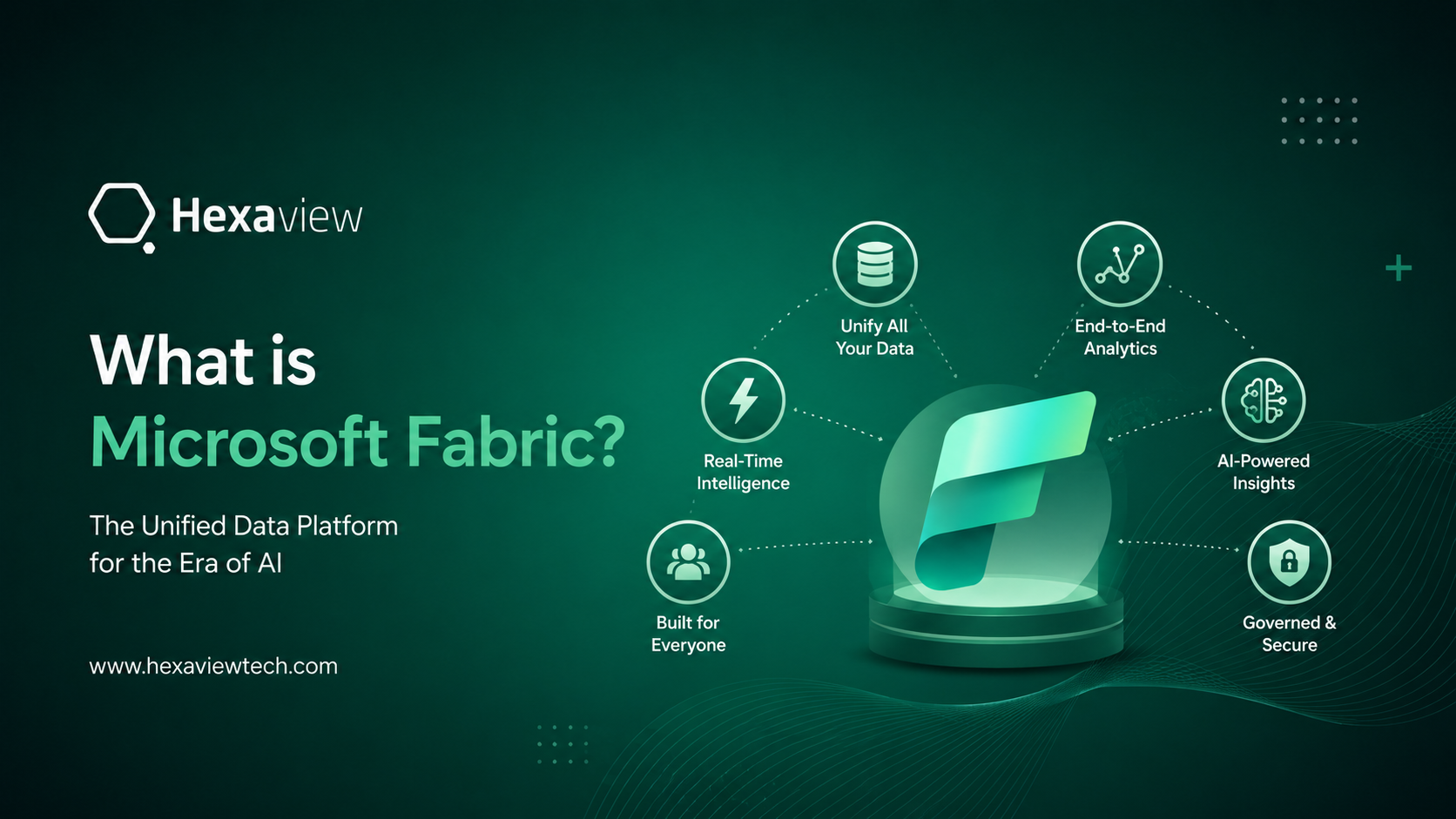
Modern enterprises need a unified data and analytics platform. Organizations collect massive volumes of data daily. However, extracting real value requires a cohesive strategy. Teams must collaborate efficiently without moving data between disconnected systems.
Traditional setups present significant challenges. Managing multiple analytics tools creates fragmented environments. Teams frequently struggle with data silos and complex integration processes. These disparate tools slow down decision-making and increase security risks.
Microsoft Fabric solves these challenges completely. This software-as-a-service platform unifies your entire analytics workflow. It connects data integration, engineering, warehousing, data science, and business intelligence. By using a centralized OneLake, Fabric eliminates data duplication and embeds helpful AI capabilities.
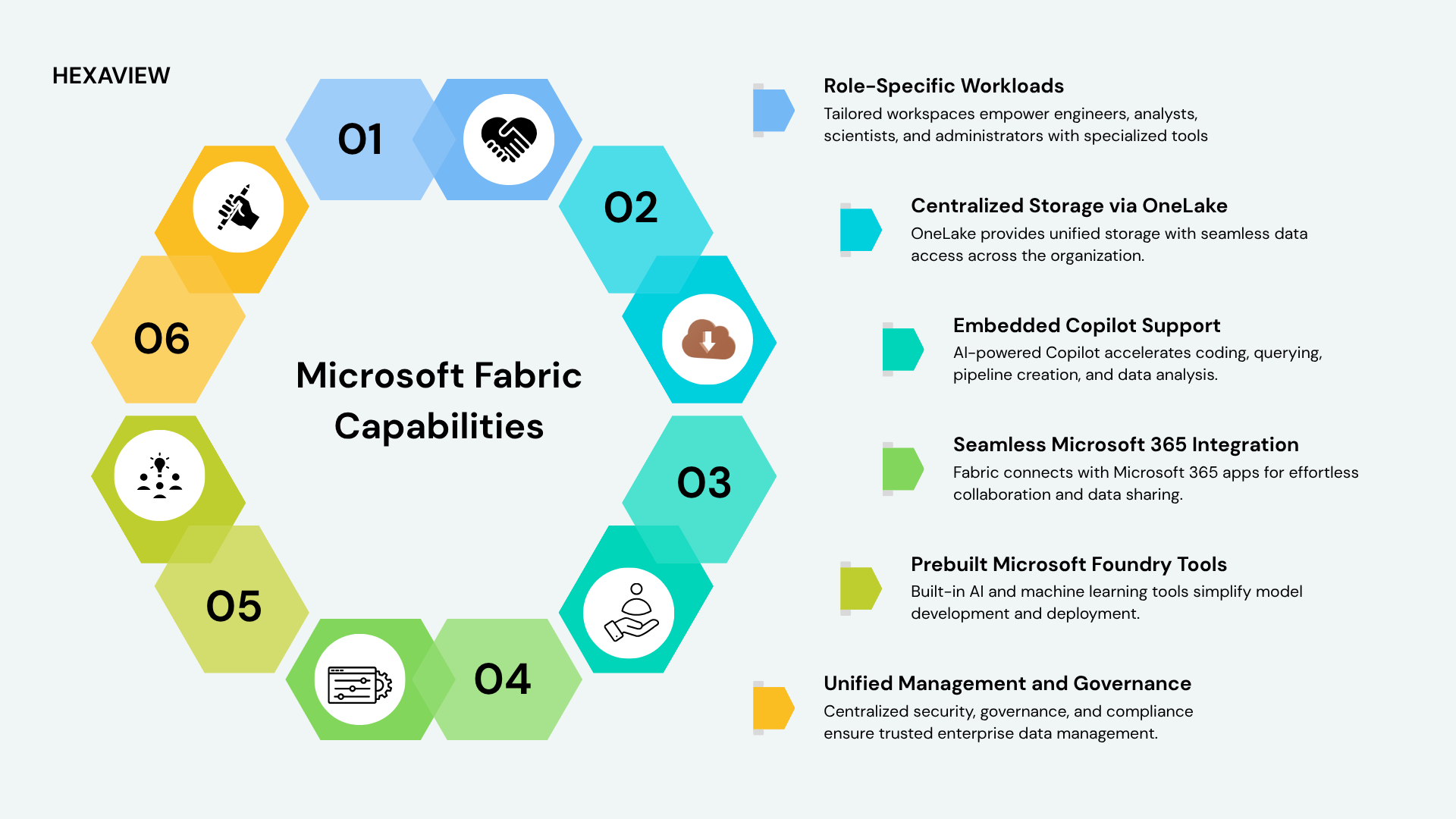
Role-Specific Workloads
Fabric delivers tailored environments for every data professional. Engineers, scientists, analysts, and database administrators get custom tools. Each workspace optimizes specific tasks like data ingestion, modeling, and reporting. Teams can combine these individual tools to build comprehensive, end-to-end data solutions.
Centralized Storage via OneLake
All components in Fabric function on top of OneLake. This system builds a single, logical data lake using Azure technology. It provides instant, shared data access across the entire organization. You never have to copy, move, or duplicate files between systems.
Embedded Copilot Support
AI-powered assistance improves efficiency throughout the entire platform. Copilot helps users write code, build data pipelines, and construct queries. The assistant also generates quick summaries and provides deep insights. These automated features quickly accelerate routine development and analysis workflows.
Seamless Microsoft 365 Integration
The platform connects directly with the business tools you use daily. Professionals can analyze and consume organizational data inside Microsoft Excel. Teams also share reports and collaborate smoothly through Microsoft Teams surfaces. This integration brings data insights straight into regular workplace conversations.
Prebuilt Microsoft Foundry Tools
Fabric integrates with Microsoft Foundry to boost advanced artificial intelligence projects. Users quickly access prebuilt machine learning models and specialized developer tooling. The platform supports your entire AI cycle, including model development, deployment, and inference. This makes advanced predictive analytics accessible to everyone.
Unified Management and Governance
Security and compliance remain consistent across every corporate workspace. Fabric centralizes data discovery, user access control, and strict governance protocols. Organizations manage data sharing safely while adhering to regulatory compliance standards. This single control plane builds trust in your corporate data assets.
The architecture of Microsoft Fabric unifies complex data systems into a single, cohesive framework. It organizes components logically, so teams work seamlessly across different development layers. This eliminates the traditional friction found between separate analytics systems.
SaaS Foundation
Fabric operates entirely as a cloud-native software-as-a-service platform. This model provides a fully unified analytics environment out of the box. Users avoid complex infrastructure setup and manual software deployment. Microsoft manages the underlying hardware resources, updates, and maintenance tasks automatically.
OneLake
Every workload in Fabric relies on a centralized logical data lake called OneLake. This component acts as your single source of truth for all enterprise assets. It features a unique zero-copy architecture that eliminates data movement entirely. Multiple specialized computing engines instantly share access to the exact same physical files.
Platform Layer
The central platform layer handles the essential operations that keep data pipelines running smoothly. It provides shared compute capacity across the entire system. Centralized administration controls ensure standard enterprise-grade security and governance boundaries. Built-in Microsoft Purview integration automatically applies compliance policies and tracks asset lineage.
AI Layer
A powerful artificial intelligence layer runs natively across the entire software ecosystem. Copilot features offer robust, AI-assisted development inside every major tool. The system introduces advanced AI capabilities for fast data analysis. This specialized automation boosts daily developer productivity by generating code and queries instantly.
Workload Layer
Distinct, role-specific workloads sit directly above the unified core platform layer. These include Data Factory, Data Engineering, Data Warehouse, and modern transactional Databases. Real-Time Intelligence handles streaming data while Power BI delivers interactive business reporting. Every workload connects naturally to OneLake without requiring extra configuration steps.
Learn More About Microsoft Fabric Architechture

Unified Analytics Platform
Microsoft Fabric brings together a variety of fragmented data tools under one single umbrella. It provides teams with a uniform user interface and architecture across the entire project lifecycle. This cohesion allows data professionals to extract insights effortlessly instead of manually stitching separate products together.
OneLake for Centralized Storage
At the heart of the platform sits OneLake, a built-in SaaS data lake. Much like OneDrive stores office files, OneLake stores all enterprise data artifacts in one location. This native centralization entirely removes disorganized data silos by providing a single, logical storage unit for everyone.
AI-Powered Analytics
Azure OpenAI Service integrates deeply into every single data layer of the environment. The built-in Copilot allows users to interact with their datasets using conversational, natural language. Developers can automatically build machine learning models, generate code functions, and create data pipelines through simple chat.
Integrated Security and Governance
Fabric establishes natural governance and strict compliance boundaries directly at the corporate tenant level. The platform automatically secures all incoming files that land within the shared logical lake. Centralized administration ensures that sensitive enterprise assets remain protected by default across every workload.
Simplified Data Management
The system eliminates complex infrastructure management tasks like configuring individual storage accounts and resource groups. Data professionals no longer need to spend valuable hours figuring out complex product licensing. This radical simplicity enables teams to focus entirely on driving business results.
Real-Time Analytics
Specialized streaming features allow organizations to capture and analyze data from Internet of Things devices. The system processes massive volumes of semi-structured log data with exceptionally low latency. This high-performance engine ensures businesses react immediately to shifting conditions.
Collaboration Across Teams
Fabric empowers a modern, data-driven culture by making advanced analytics accessible to everyday business users. The platform connects naturally with everyday Microsoft 365 applications like Excel and Teams. This deep integration makes sharing insights and collaborating on reports an intuitive experience.
Reduced Tool Complexity
Organizations can purchase a single pool of unified compute capacity to power all workloads. When one data engineering task finishes, its idle capacity shifts to help data science or reporting. This all-inclusive resource model eliminates waste and significantly reduces overall corporate software costs.
Microsoft Fabric breaks down traditional product boundaries by delivering a comprehensive suite of tightly integrated components. Instead of forcing companies to buy, configure, and connect separate cloud software tools, Fabric packages every essential asset inside a single environment. Each specialized piece addresses a specific phase of the modern corporate data lifecycle.

Power BI
Power BI serves as the primary visualization engine for business users across the enterprise. It transforms complex datasets into clear, interactive dashboards and deep analytical reports. The tool delivers essential business intelligence by allowing decision-makers to explore live trends visually. Because it connects natively to the underlying architecture, updates show up instantly without manual data exports.
Data Factory
Data Factory functions as the primary data integration hub for the entire system. It allows developers to solve complex ingestion challenges by connecting easily to hundreds of cloud and on-premises sources. Users build robust data pipelines using a simple, visual interface to clean, transform, and move corporate information smoothly.
Data Engineering
This module provides high-performance Apache Spark workloads designed to process vast amounts of raw data efficiently. Engineers use it to build an enterprise lakehouse, which combines the flexibility of a data lake with the structure of a database. The component simplifies large-scale data cleaning, transformation, and preparation tasks within a collaborative notebook environment.
Data Science
Data Science provides specialized tools that allow professionals to build, train, and manage sophisticated machine learning models directly inside the platform. It integrates naturally with advanced tracking registries to streamline the entire model development cycle. Businesses use these predictive capabilities to uncover trends and enrich standard reports with intelligent forecasts.
Data Warehouse
This engine delivers industry-leading SQL analytics performance at an impressive enterprise scale. It functions by completely separating compute capacity from storage resources to ensure independent scaling. The warehouse uses open data formats naturally, allowing standard database administrators to run complex queries against massive tables quickly.
Databases
Fabric includes user-friendly operational databases that handle regular daily transactional workloads seamlessly. Through a unique mirroring capability, the platform continuously replicates information from external operational systems directly into the central core. This feature ensures that live transactional records become instantly available for analytical processing without manual intervention.
Real-Time Intelligence
This component focuses entirely on capturing and processing fast-moving streaming data as it arrives. It handles continuous information streams from Internet of Things sensors, application logs, and system events with minimal latency. The system enables companies to monitor active operations instantly and trigger automated business actions when specific patterns emerge.
OneLake
OneLake serves as the centralized logical data lake that underpins the entire corporate software environment. It acts as a single source of truth, storing all enterprise information in one unified namespace. The architecture supports secure external data sharing across business boundaries, allowing different groups to access live datasets without making physical copies.
Copilot
Copilot embeds powerful artificial intelligence assistance directly into every phase of the developer workflow. The assistant speeds up complex tasks by handling automated code generation and query writing within notebooks. It also assists directly with rapid data preparation and analysis, allowing professionals to interact with large datasets using conversational language.
Deploying a multi-faceted SaaS analytics environment requires specialized expertise to avoid common integration pitfalls. Hexaview helps organizations transition smoothly from fragmented, siloed data environments to a unified platform model. Their technical specialists guide businesses through every stage of the adoption lifecycle.
Experienced Microsoft Fabric consultants evaluate your existing infrastructure, analytical workflows, and overarching business objectives. Hexaview provides strategic Microsoft Fabric consulting services to help leaders map out clear operational roadmaps. This targeted guidance ensures organizations select the right capacities and scale their environments efficiently.
Hexaview delivers comprehensive Microsoft Fabric implementation services that cover the entire data lifecycle. Engineers configure workspaces, establish ingestion pipelines, and connect computing engines seamlessly. This complete setup provides operational teams with a fully functioning environment from day one.
Legacy infrastructures frequently slow down business growth and increase operational maintenance costs. Hexaview modernizes your data foundation by consolidating outdated systems into a single SaaS framework. This transformation eliminates infrastructure complexities and unifies corporate reporting metrics.
Moving vast volumes of enterprise information requires a secure, well-planned migration strategy. Specialists design careful data replication paths to transfer existing assets without disrupting active business operations. Hexaview mitigates architectural risks while maintaining strict data continuity throughout the transition.
Every organization maintains unique data relationships, processing requirements, and system connections. Hexaview architects custom workspaces and logical lakehouse environments specifically tailored to your corporate needs. They maximize performance by leveraging native features like OneLake shortcuts to prevent data duplication.
Protecting digital assets requires centralized administration controls across all active workspaces. Hexaview establishes robust access management protocols and configures Microsoft Purview integrations correctly. This precise setup enforces regulatory compliance while protecting sensitive corporate datasets automatically.
Modern business intelligence relies heavily on advanced predictive insights and machine learning models. Hexaview structures your underlying data lakehouse to interact perfectly with generative AI layers. This clean foundation ensures that automated features like Copilot deliver highly accurate operational results.
Microsoft Fabric marks a major shift in how modern enterprises manage their information. By consolidating complex, fragmented tools into a single software-as-a-service framework, the platform completely eliminates traditional data silos. The combination of a unified OneLake storage layer and native AI-powered workflows helps business professionals move rapidly from raw data ingestion to polished corporate reporting. Organizations that establish this modern architecture significantly reduce overall software licensing costs while scaling their analytics infrastructure smoothly.
What is the difference between Microsoft Fabric and Power BI?
Power BI functions primarily as a specialized business intelligence tool for data visualization and interactive reporting. Microsoft Fabric serves as a much broader enterprise analytics ecosystem. Power BI lives natively inside Fabric as one of its core role-specific workloads, sitting alongside data engineering, data warehousing, and machine learning modules.
Does Microsoft Fabric replace Power BI?
No, the platform does not replace Power BI at all. Power BI remains a standalone industry leader for data analysis and corporate visualization. Microsoft has simply integrated its full capabilities into the overarching Fabric framework to provide business users with a more direct path to their central data sources.
What is OneLake in Microsoft Fabric?
OneLake operates as a centralized, logical data lake that acts as a single source of truth for your entire corporate tenant. Much like OneDrive stores office files in a single unified namespace, OneLake stores all enterprise data assets. It features a unique zero-copy architecture that allows multiple computing engines to share access to the exact same physical files without duplication.
Do you need an Azure account to use Microsoft Fabric?
No, users do not need a personal or dedicated corporate Azure account to utilize the platform. Microsoft Fabric functions as a fully managed cloud-native SaaS solution. The system removes infrastructure complexities by handling resource groups, regions, and virtual networks automatically behind the scenes.
How does Copilot assist developers within Microsoft Fabric?
The integrated AI layer embeds intelligent assistance across every major workspace component. Copilot allows professionals to use natural conversational language to generate complex SQL queries, construct data pipelines, and write Python code inside notebooks. It also aids data preparation tasks and builds quick summaries of large datasets.
What is Direct Lake mode in Power BI?
Direct Lake mode is a cutting-edge data connectivity option introduced specifically within the Fabric ecosystem. It allows Power BI semantic models to query huge datasets directly from OneLake without moving or copying the underlying data. This approach combines the blazing-fast query speeds of import mode with the real-time updates of direct query mode.
How does Microsoft Fabric handle data governance and compliance?
The platform centralizes all security boundaries and compliance protocols directly at the tenant level through built-in Microsoft Purview integration. All files that enter OneLake inherit sensitivity labels and access management policies automatically. This central administration keeps data sharing secure across different corporate departments.






.svg)



.svg)