

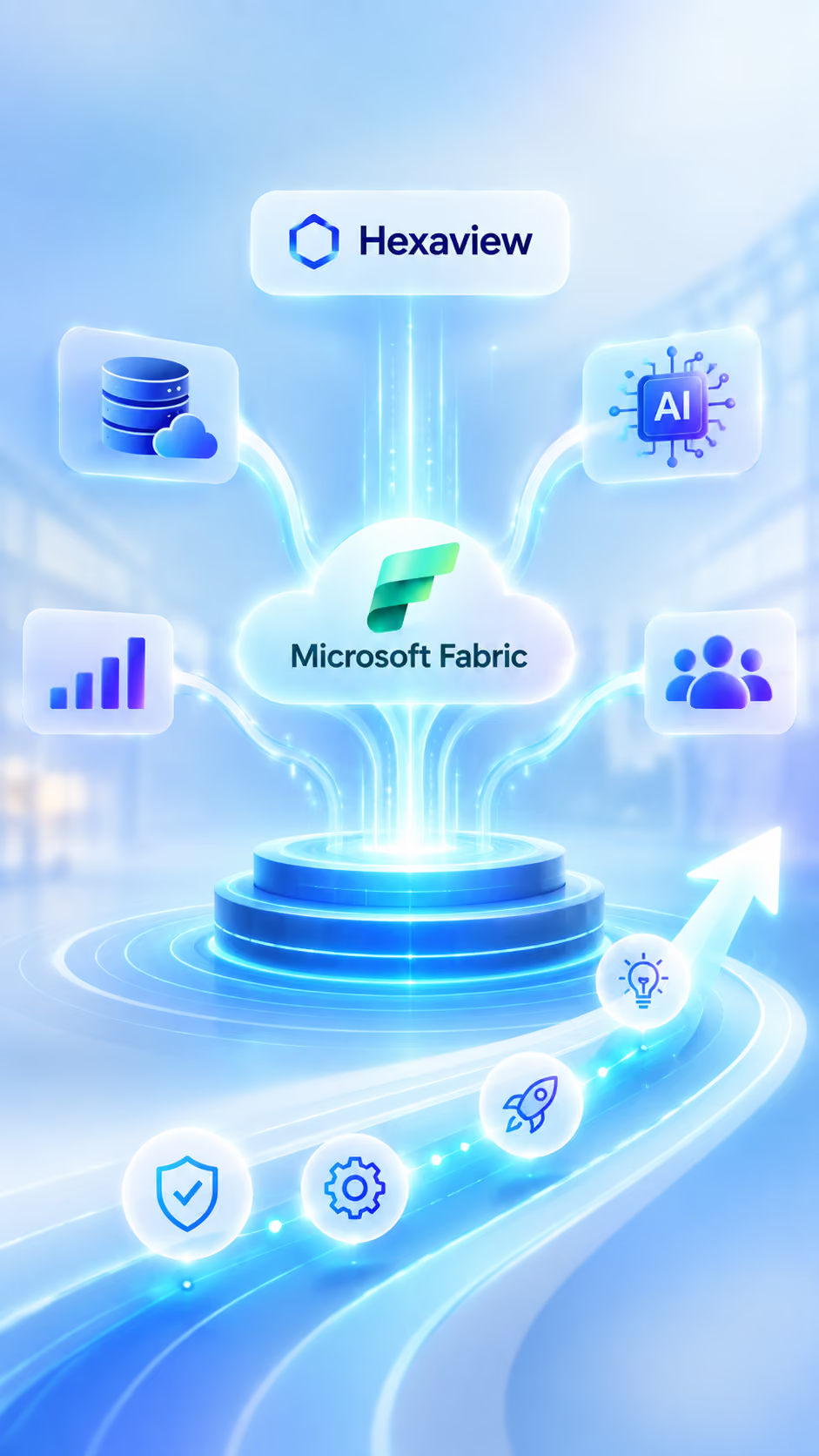
One Governed Data Estate
OneLake stores data once. Power BI, data engineering, and real-time intelligence all read from that same copy, so two departments stop reporting two different numbers for the same metric.

From strategy to production, we manage the complete Microsoft Fabric implementation lifecycle, including workspace and capacity setup, OneLake configuration, pipeline development, data migration, and go-live support. We’ve delivered multiple Fabric implementations for US-based teams, helping organizations turn their Fabric roadmap into a reliable, production-ready data environment.
Microsoft Fabric implementation services move an organization off scattered legacy tools and onto Microsoft's unified Fabric platform: one governed lakehouse, real-time analytics, and Copilot built in. Hexaview Technologies plans, builds, and supports the full Microsoft Fabric deployment, from architecture through go-live, as a certified Microsoft Fabric implementation partner for regulated, data-heavy industries.
Share a few details and we'll reach out within one business day.
Delivering 16+ years of excellence




.webp)
.svg)

Deciding to adopt Microsoft Fabric is one project. Getting it running in production is another. Most teams get stuck in between – a platform that's approved but not configured, a migration that's scoped but not executed, a go-live date that keeps slipping. That's the gap this team closes. Still deciding if Fabric is the right platform for you? See our Microsoft Fabric Consulting Services.
.png)

You've already chosen Fabric and need it built, not re-evaluated
A pilot or proof of concept needs to move into production
Your migration is scoped on paper but no one owns the execution
You need OneLake, pipelines, and governance configured correctly the first time
There's a go-live date on the calendar and no one delivering to it yet

Workspace & capacity setup
Data pipeline development
Migration & validation
Power BI integration
Documentation & handover
OneLake configuration
Lakehouse / warehouse build
Security & governance configuration
Go-live support & hypercare
Post-launch monitoring setup
Microsoft Fabric Implementation services follow a fixed sequence, whether you're coming from Synapse, Databricks, or spreadsheets held together with macros: six stages, six to ten weeks for a standard scope.
Audit the current stack (Synapse, Power BI, on-prem SQL Server), define target KPIs, and size the Fabric capacity you actually need.
Workspace strategy, governance model, and a migration sequence that protects your live reporting schedule.
OneLake design, security and access model, and capacity provisioning inside your Azure tenant.
Move pipelines, connect source systems, and rebuild or lift-and-shift semantic models onto Fabric.
Validate data accuracy, load performance, and report parity against the legacy environment before anyone signs off.
Production Microsoft Fabric deployment, cutover, and hands-on hypercare for the first two weeks of live use.
Capacity monitoring, tuning, and a 90-day performance review built into the engagement.
The real payoff of Microsoft Fabric Implementation Services starts with simplification.Fewer disconnected layers mean less time stitching data together and more time using it.
OneLake stores data once. Power BI, data engineering, and real-time intelligence all read from that same copy, so two departments stop reporting two different numbers for the same metric.
Natural language queries and automated insight detection sit inside the platform itself, not as a separate license someone forgets to renew.
A Forrester Total Economic Impact study commissioned by Microsoft found a 379% ROI over three years for organizations running Fabric, with a net present value of 9.79 million dollars for the composite organization studied (Forrester Consulting, commissioned by Microsoft, 2024).
The same study recorded a 90% cut in time data engineers spent searching for, integrating, and debugging data, a 25% overall productivity gain (Forrester Consulting, commissioned by Microsoft, 2024).
Role-based access, sensitivity labels, and audit trails apply across the whole platform instead of tool by tool, which matters most in financial services and healthcare.
Streaming ingestion and alerting are native to Fabric, so dashboards move from lagging monthly snapshots to something closer to live.
More than 28,000 organizations now run on Microsoft Fabric worldwide (Microsoft Fabric Community, 2025). Picking the right Microsoft Fabric implementation partner decides whether your organization joins that list smoothly or spends a year redoing a rushed migration.
Some data estates feel the pain of fragmentation faster than others. These are the industries where a Fabric rollout tends to pay for itself inside the first two quarters.
Real-time portfolio and risk visibility in place of overnight batch reporting.
A governed lakehouse for patient and claims data that is ready for predictive modelling.
Claims and underwriting data unified for faster, fraud-aware decisions.
Inventory, supply chain, and demand data on one platform instead of five spreadsheets.
Governance and audit trails built into the platform from day one, not added after an incident.
A national trust and wealth management client came to Hexaview running reporting off a mix of Synapse pipelines and manually refreshed Power BI files, with regulatory reports that could not slip by even a day.

What Hexaview delivered: a layered Lakehouse on OneLake, migrated historical reporting data from trust administration, CRM, and regulatory sources, and modernized Power BI reporting on top of governed semantic models, without a single missed filing during cutover.
These are the questions enterprise buyers ask before committing. If yours isn't here, ask us directly.
Most Microsoft Fabric implementation services engagements run six to ten weeks for a standard scope, covering assessment through go-live. Larger environments with heavy Synapse or on-prem SQL Server migration can run twelve to sixteen weeks, staged so live reporting never goes dark.
Four things move the number most: data volume, the number of source systems being connected, the Fabric capacity SKU you land on, and how much of your existing Power BI and Synapse work can be carried forward instead of rebuilt.
Power BI is the reporting layer inside Fabric. Microsoft Fabric adds data engineering, data warehousing, real-time intelligence, and OneLake underneath that layer, so Power BI reports draw from one governed source instead of a separate import each time.
No. A well-run Microsoft Fabric implementation carries existing Power BI reports forward through Direct Lake mode, which lets them read Fabric data directly, so most reports are reconnected rather than rebuilt from scratch.
Look for certified Fabric consultants (not just a Microsoft partner badge), a fixed-scope timeline instead of an open-ended retainer, named references in your industry, and a support plan that extends past go-live rather than stopping at handoff.
Yes. Our Azure Data Factory to Fabric and SQL Server to Fabric paths cover the two most common starting points for a Microsoft Fabric deployment. Both get sequenced around your live reporting calendar so nothing breaks mid-migration.
Whether you are migrating off Synapse, retiring a patchwork of Power BI files, or standing up Fabric for the first time, we scope the engagement around your reporting calendar. Talk to a Microsoft Fabric implementation partner that measures success in weeks, not fiscal quarters.


.svg)


.svg)