

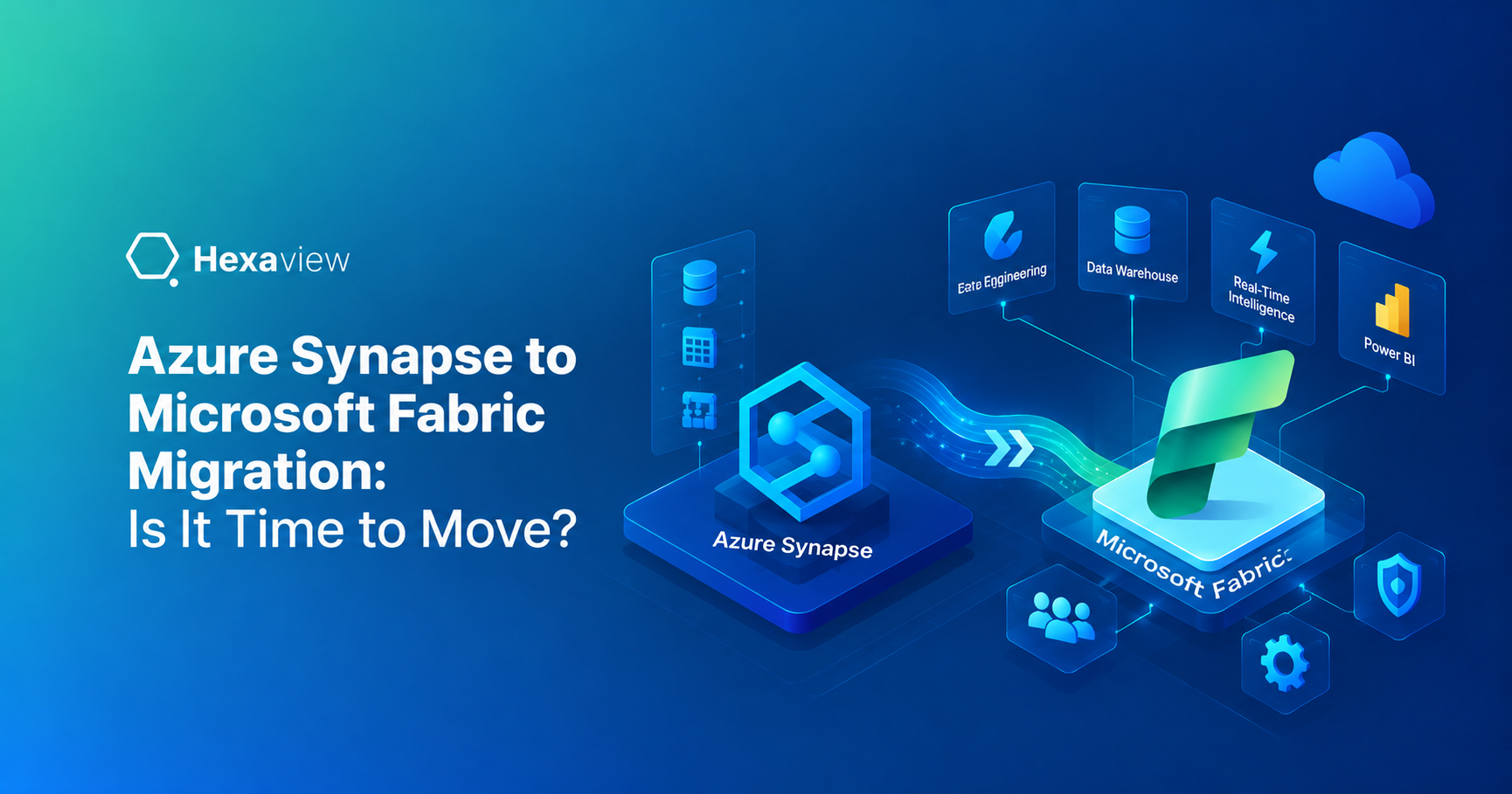
Is Azure Synapse becoming legacy?
Azure Synapse isn't shutting down. But the ground under it has shifted more than Microsoft's messaging lets on.
A preview feature got retired last October. A Cosmos DB integration quietly stopped being recommended for new work. A Spark runtime many teams still run reached end of support this spring. None of this is "Synapse being killed," and none got much fanfare. The changes are real and documented, just scattered across enough Microsoft Learn pages that most teams find out when something breaks.
For organizations considering Azure Synapse to Microsoft Fabric migration, the question is no longer simply whether Synapse still works. It does. The bigger question is whether continuing with the existing platform still makes sense as part of a broader Azure Synapse modernization strategy.
No.
Microsoft hasn't announced an end date. What's changed is narrower: specific capabilities retired, specific integration paths no longer recommended for new projects, specific Spark runtimes past end-of-support.
Meanwhile, Microsoft Fabric is where new investment, features, and migration tooling land first. That's the real story: not "Synapse is dead," but a widening gap between where Synapse stands still and Fabric moves.
For organizations planning Azure Synapse migration, this distinction matters. You don't need to abandon Synapse overnight. But you should understand which workloads have a clear path toward Microsoft Fabric migration, and which can safely remain where they are.
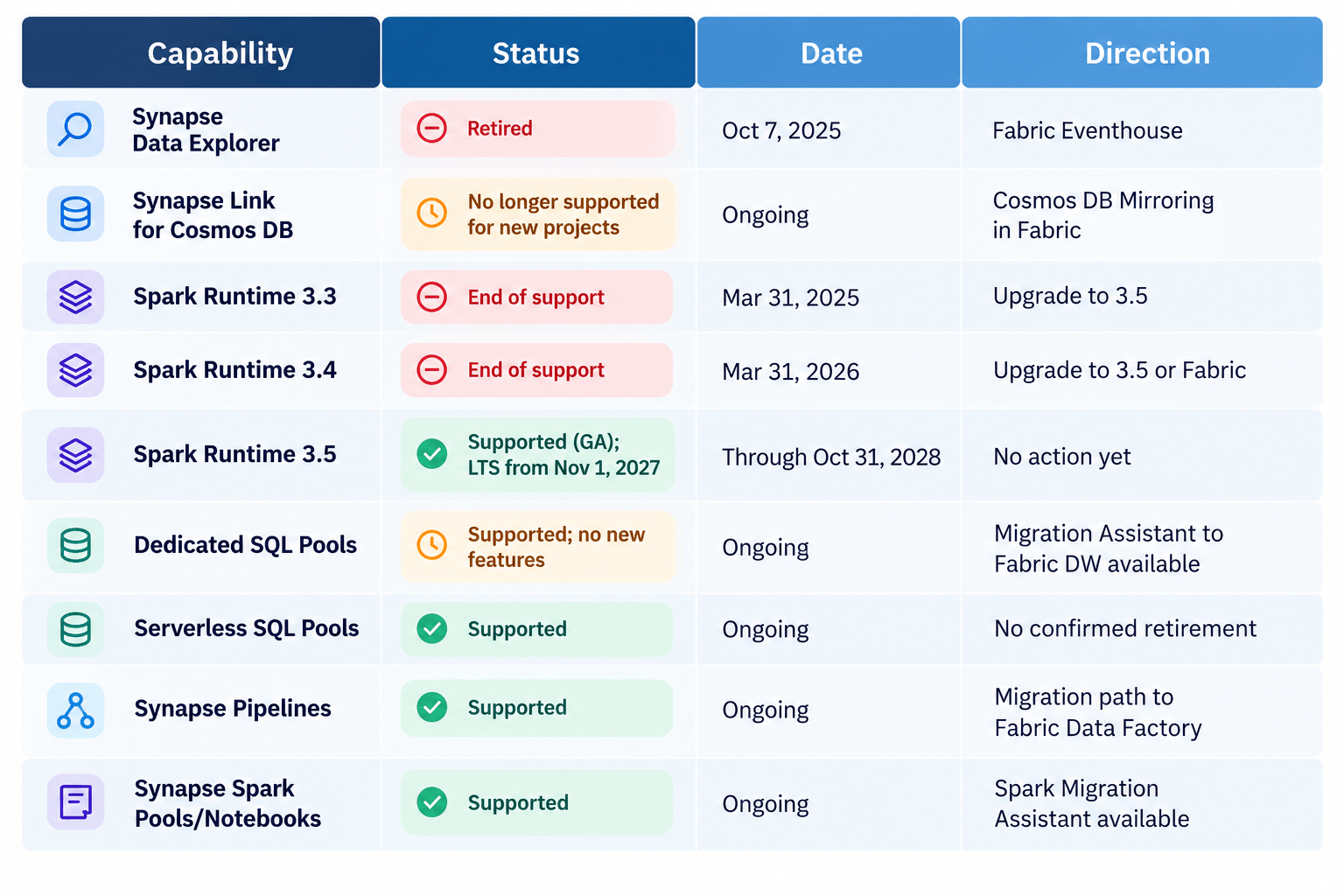
Two rows people misread most: Synapse Data Explorer's retirement date has already passed, any workload left on it lost its data. Synapse Link for Cosmos DB is not retired, current users can keep running it, but Microsoft says plainly not to build anything new on it.
Fabric's pitch is architectural. Instead of separate services for integration, warehousing, Spark, real-time analytics, and BI, everything sits on one shared storage layer, OneLake, so SQL, Spark, and Power BI read the same copy of data. A typical Synapse setup duplicates the same dataset across a lake, a SQL pool, and a Power BI dataset; Fabric's goal is one governed copy.
The numbers back the direction: per Microsoft's FY26 Q4 earnings call, Fabric passed 40,000 paid customers, up 60% year-over-year, its fastest-growing analytics platform. Not proof Fabric fits your workload, but proof where Microsoft's own investment is concentrated.
This is why Microsoft Fabric migration is becoming an increasingly relevant consideration for organizations already running Synapse.
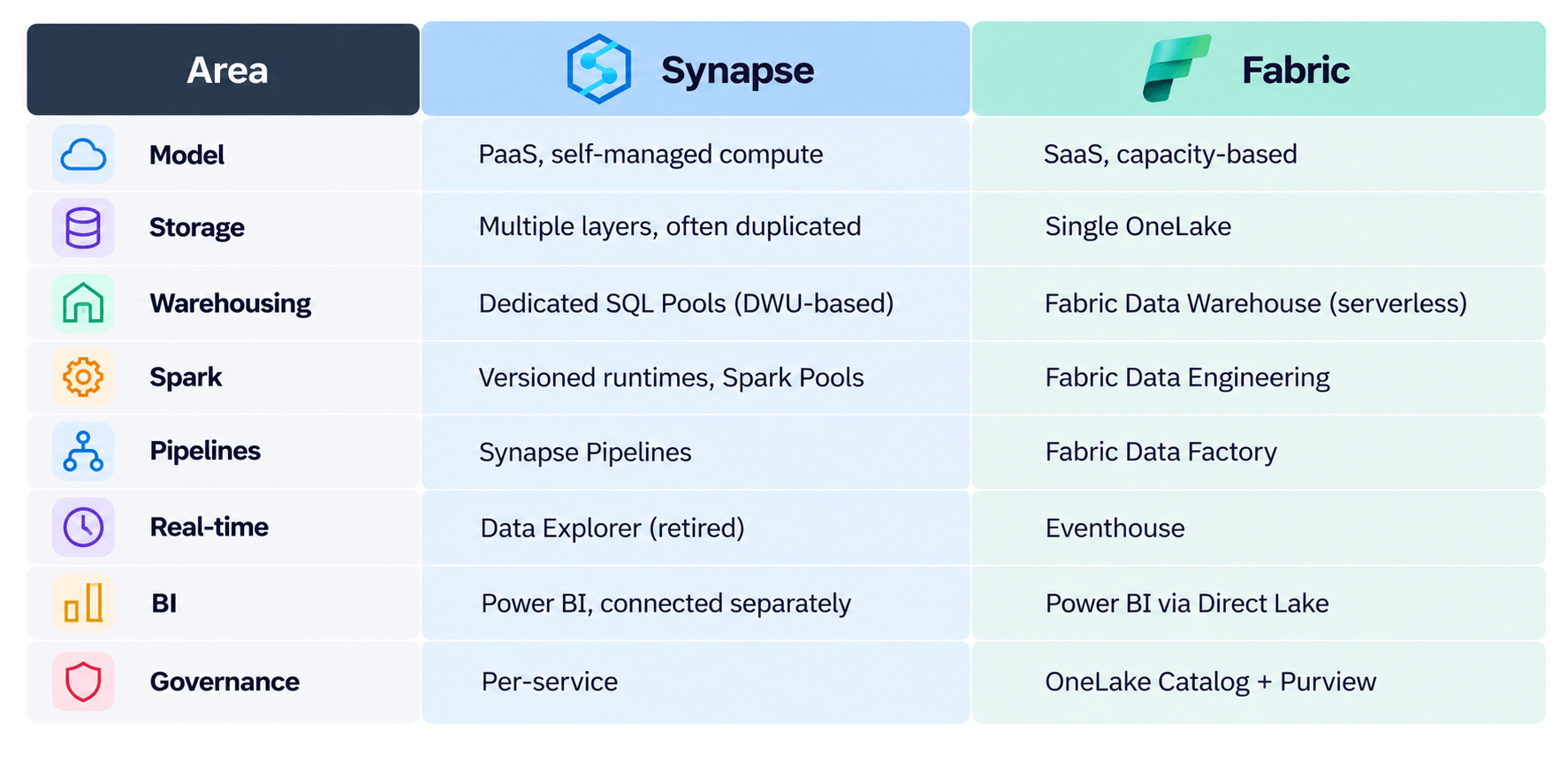
Neither wins outright. Synapse's PaaS model gives more infrastructure control, which some regulated environments still need. Fabric trades that for less overhead and tighter integration.
A Synapse to Fabric migration can cover several major workload types, but each requires a different approach.
Tooling speeds migration, doesn't make it automatic. Real friction: T-SQL gaps in old stored procedures; Spark library dependencies that surface only when something breaks; Managed VNET and Entra ID role models that don't map directly into Fabric's structure; catalog references that silently point wrong unless checked; validating row-level security and query results match before cutover. Rerouting downstream reports and jobs is a coordination job, not a technical one.

Ten stages, not five: check what depends on retiring capabilities, catalog every asset, map each to its Fabric destination, set up security before migrating, move low-risk workloads first, fix what tooling flags, validate results match, reroute connections with a rollback plan, optimize the design once stable, decommission Synapse only after validation.
Nothing breaks day one. Unsupported runtimes stop getting patches. Debt compounds, since new logic built today still has to migrate eventually. Older, more customized environments are harder to migrate than newer ones. And teams often end up running Fabric and Synapse side by side by default, doubling what needs securing and staffing.
Migrating is also a chance to rethink, not just reproduce, the old setup. OneLake shortcuts can remove physical data copies entirely. Lakehouse and Warehouse share the same Delta tables, so a separate BI-only warehouse copy may not be needed anymore. None of this means always rebuild from scratch, a faithful lift-and-shift is often the right first move, with re-architecture as a deliberate second phase.
Most difficulty isn't any single step, it's correctly assessing what depends on what across years of Synapse history. Hexaview Technologies is a Microsoft Fabric implementation company, with a Fabric Certified Developer on staff and delivery experience across roughly half a dozen client Fabric implementations.
One recurring result: a client moving its BI and warehousing environment into a Fabric Lakehouse saw a meaningful drop in reporting turnaround once data stopped needing separate copies and re-modeling, illustrating what OneLake's shared storage is built to deliver. That experience matters most in assessment and planning, where a migration's real cost and timeline actually get decided.
No. Microsoft has not announced a full retirement date for Azure Synapse. However, several capabilities and Spark runtimes have reached retirement or end-of-support, while Microsoft continues investing heavily in Fabric.
Microsoft Fabric is increasingly the preferred platform for new analytics workloads. However, Synapse remains supported, so organizations do not need to migrate immediately unless their workloads or business strategy make migration beneficial.
Migration makes sense when you rely on retired capabilities, unsupported Spark runtimes, or face data duplication and infrastructure overhead. Stable workloads requiring greater infrastructure control may justify staying on Synapse longer.
Yes. Organizations can run Synapse and Fabric side by side during a phased migration. This approach allows teams to move lower-risk workloads first while validating security, performance, and data accuracy.
No. Microsoft's migration tools can accelerate the process, but migration still requires assessment, compatibility checks, security validation, testing, and downstream connection changes.
Dedicated SQL Pools remain supported, but Microsoft is not adding new features to them. The Fabric Data Warehouse Migration Assistant can help migrate schemas and data while identifying T-SQL compatibility issues.





.svg)




.svg)