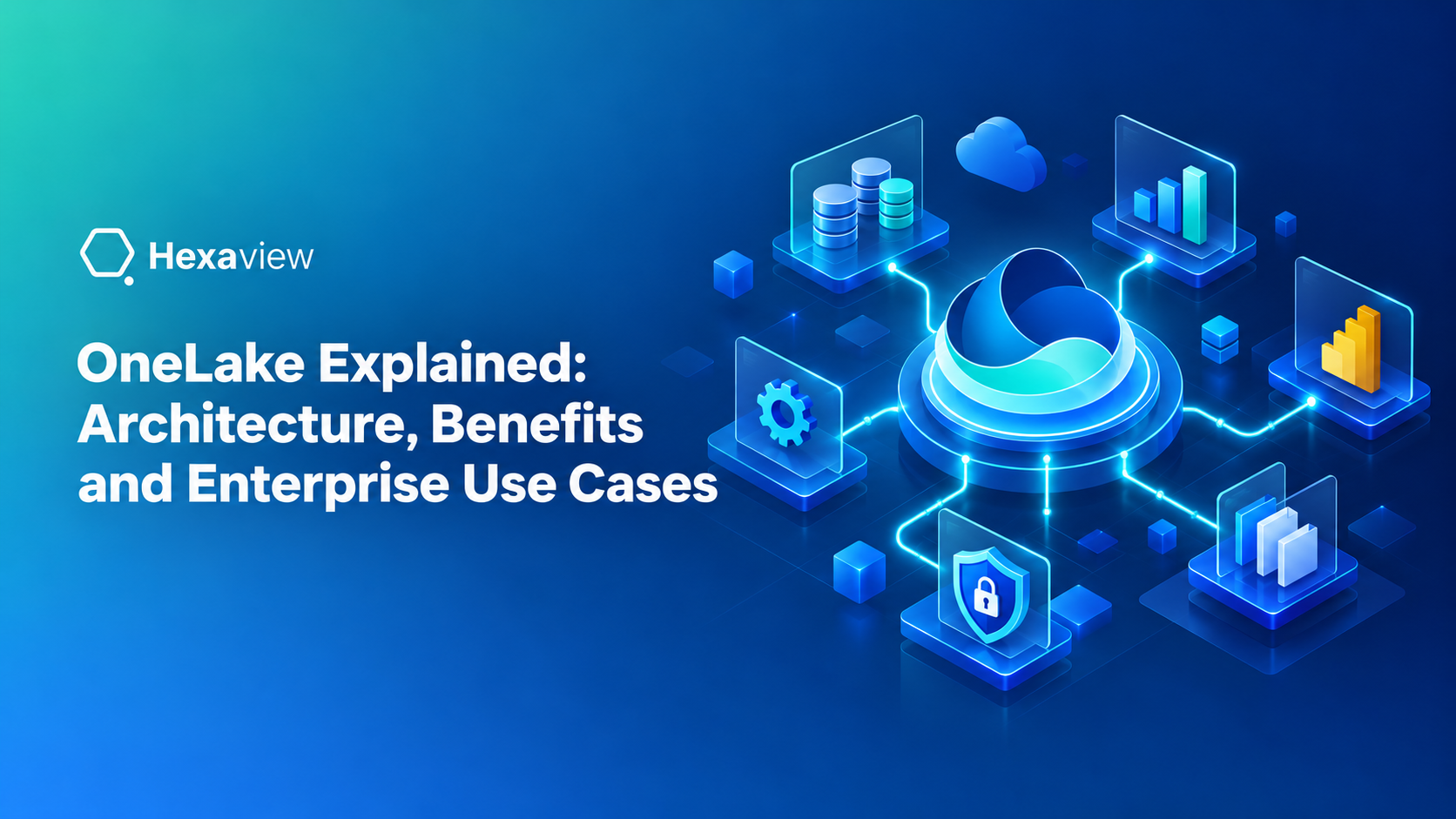
Microsoft OneLake is the unified data lake built into Microsoft Fabric. It provides a common storage foundation for an organization's analytics data, allowing Fabric workloads to access and share data through one logical data lake. With features such as shortcuts, open data formats, and integrated security, OneLake helps enterprises reduce unnecessary data duplication and simplify analytics across teams.
Microsoft OneLake is the shared, tenant-wide data lake built into Microsoft Fabric. It provides a common storage layer for enterprise data, reducing the need for separate, disconnected data lakes across departments. As a result, teams can access and manage data through a unified environment.
OneLake in Microsoft Fabric uses Azure Data Lake Storage Gen2 capabilities and supports Fabric analytics workloads. Every Fabric tenant includes OneLake, while workspaces and Fabric items organize data for different teams and projects. This structure simplifies data discovery, supports collaboration, and helps organizations maintain consistent access to enterprise information.
The OneLake architecture provides a shared storage foundation for Microsoft Fabric's analytics workloads. It separates data storage from the tools that process, query, and visualize information. Built on Azure Data Lake Storage, OneLake gives authorized workloads a common way to access enterprise data.
OneLake provides a logical, tenant-wide data lake without requiring separate storage infrastructure for every team. Fabric organizes data through workspaces and items, including lakehouses and warehouses. This structure supports distributed ownership while maintaining a shared storage foundation.
Different Fabric workloads use shared data for specific tasks:
These workloads can reuse data without automatically creating separate copies for each engine.
OneLake shortcuts reference data stored in other workspaces or supported external sources. This lets teams access data without copying it into another location. OneLake supports Delta Lake and Apache Iceberg interoperability, helping compatible tools work with shared data.
For example, a sales dataset can support engineering transformations, warehouse queries, and Power BI reporting. Teams can reuse the same underlying data instead of maintaining separate copies for every workload. However, additional copies may still be necessary for specific processing or performance requirements.
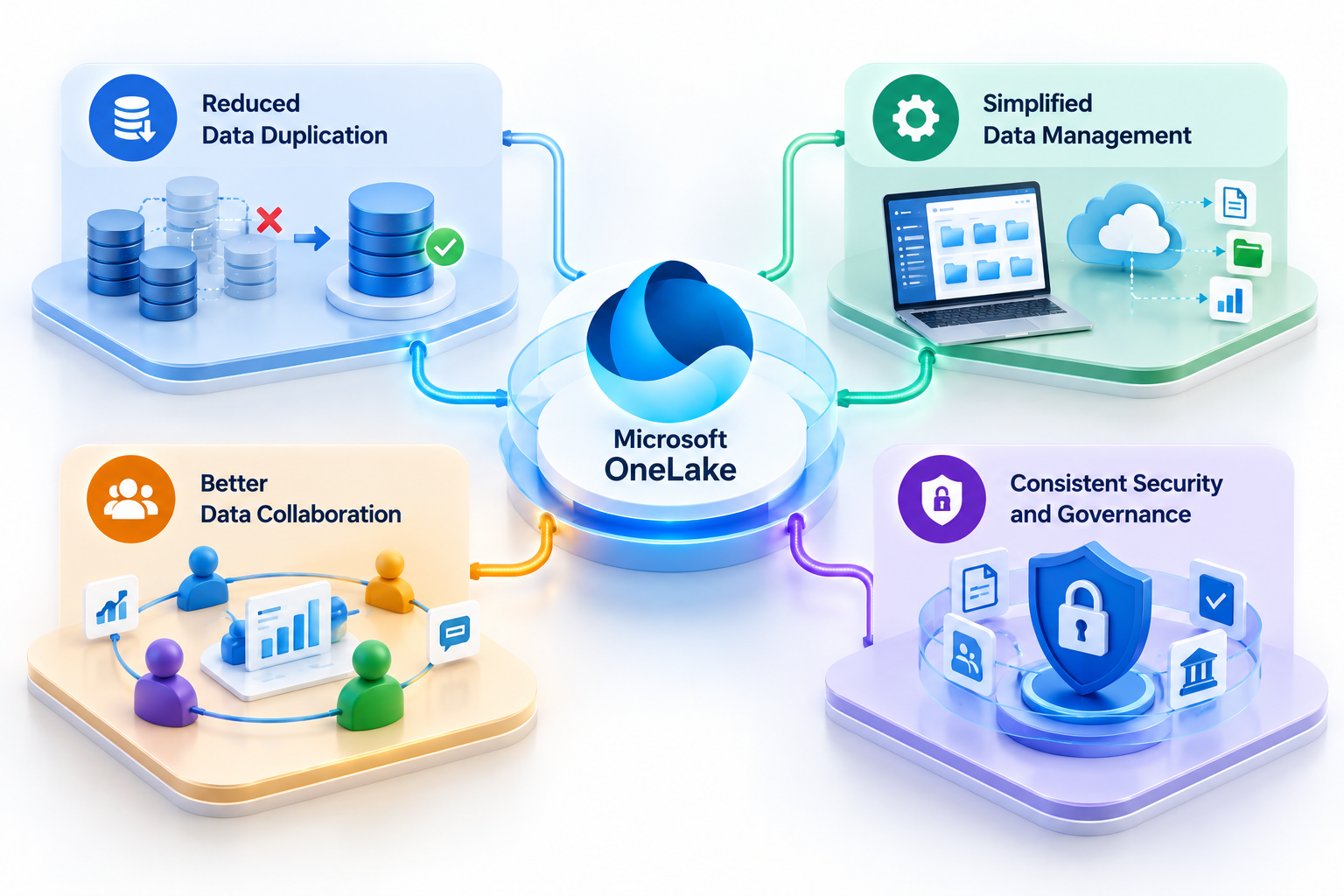
Microsoft OneLake provides a shared storage foundation that helps organizations simplify data management across Microsoft Fabric. Its benefits extend beyond storage by supporting collaboration, governance, and more efficient analytics workflows.
OneLake shortcuts let teams reference data from supported locations without creating additional copies. This can reduce unnecessary duplication, simplify data maintenance, and help keep information consistent. However, some workloads may still require separate copies for performance or processing needs.
OneLake provides a common storage namespace across a Fabric tenant. Teams can organize information through workspaces and Fabric items rather than managing entirely separate data lakes for individual workloads. This approach can reduce infrastructure administration and simplify data discovery.
OneLake in Microsoft Fabric helps engineering, analytics, and business teams access shared datasets across workspaces, subject to permissions. Teams can reuse existing data for different projects, reducing repeated preparation efforts and supporting faster collaboration.
Microsoft Fabric provides security and governance capabilities for managing access to data. Administrators can apply permissions and appropriate access controls across workspaces and supported data items. Centralized governance practices help organizations manage sensitive information and maintain consistent policies.
Overall, OneLake can shorten data preparation cycles, simplify analytics workflows, and improve consistency across teams. These benefits depend on effective architecture, permissions, governance practices, and workload requirements. OneLake supports operational efficiency, but actual cost savings depend on how organizations implement and manage their data environments.
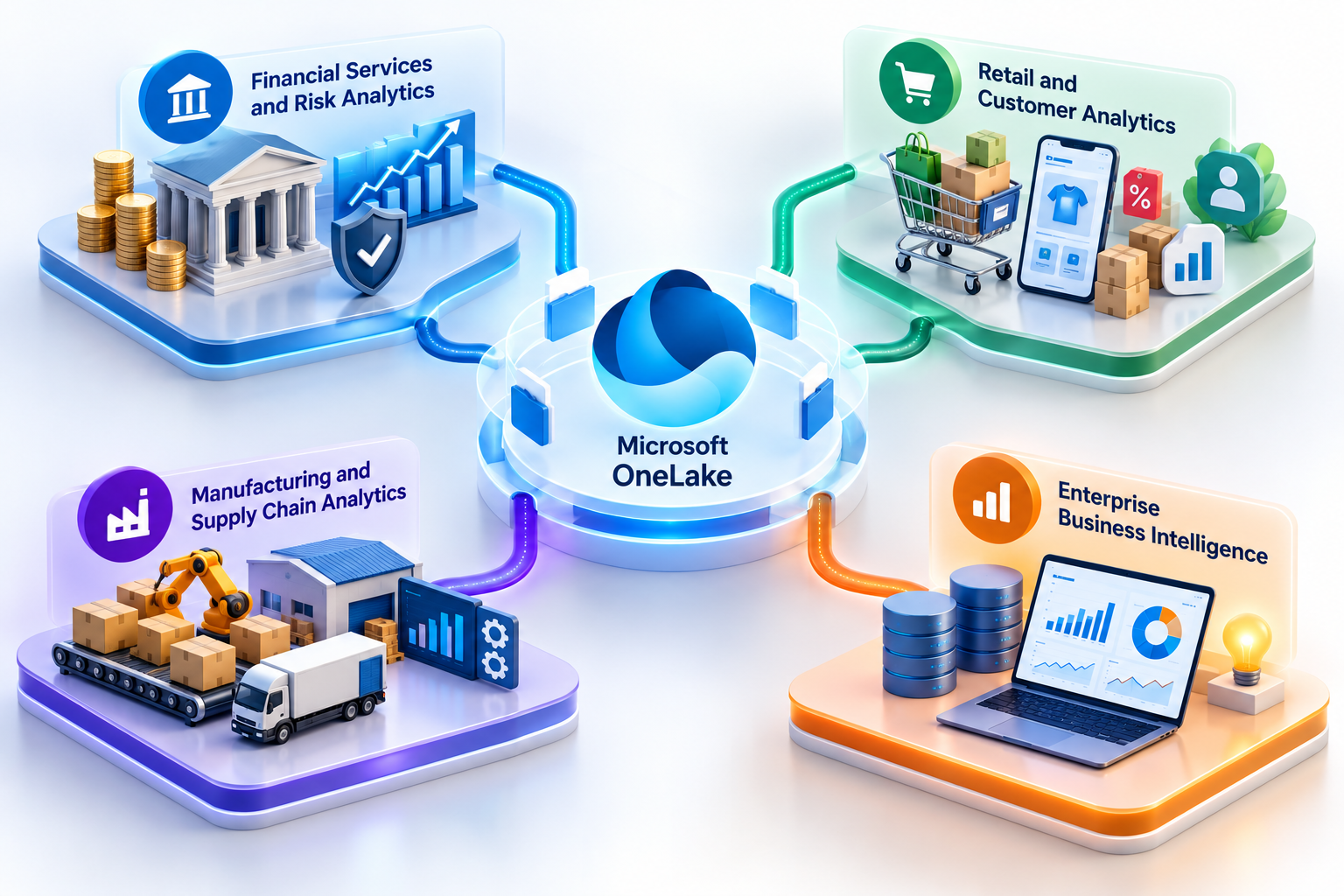
Microsoft OneLake supports enterprise analytics by making shared data available across Microsoft Fabric workloads. Organizations can bring information from multiple systems into a common environment, helping teams analyze performance, identify risks, and make informed decisions. The following use cases demonstrate how OneLake in Microsoft Fabric can support different industries and business functions.
Financial institutions manage data from transaction systems, customer relationship management platforms, lending applications, and risk databases. OneLake helps organize this information through Fabric workspaces and data items. Data Engineering can prepare datasets, while Data Warehouse supports structured queries and Power BI presents risk indicators. These capabilities help analysts examine transaction patterns, monitor portfolio performance, and identify potential fraud signals. Appropriate security controls remain essential when handling sensitive financial information.
Retailers collect information from point-of-sale systems, e-commerce platforms, inventory applications, and customer loyalty programs. OneLake helps make this data available for shared analytical workflows. Engineering teams can combine sales and inventory records, while analysts investigate purchasing behavior and product demand. Power BI dashboards can highlight seasonal trends, stock shortages, and customer preferences. Retail teams can then make better-informed decisions about inventory planning, promotions, and product availability.
Manufacturers generate data from production equipment, IoT sensors, inventory systems, and logistics platforms. OneLake helps bring these datasets into a shared analytics environment. Real-Time Intelligence can analyze incoming equipment events, while Data Engineering combines operational records with historical production data. Teams can identify equipment anomalies, investigate delivery delays, monitor production efficiency, and improve maintenance planning.
Large enterprises often maintain separate reporting systems across finance, sales, operations, and human resources. OneLake helps make authorized datasets available across Fabric workspaces. Data Warehouse supports structured reporting, while Power BI presents shared metrics through dashboards. Organizations can establish consistent KPI definitions, compare departmental performance, and prepare management reports using common data sources. This approach improves reporting consistency and reduces repeated data preparation.
These use cases demonstrate how Microsoft OneLake supports cross-functional analytics. Actual outcomes depend on data quality, workload design, access permissions, and implementation practices.
Microsoft OneLake provides a shared storage foundation, but organizations must configure appropriate access controls to protect enterprise data. OneLake in Microsoft Fabric works with Fabric security and governance features to help administrators manage access across workspaces and supported data items.
Workspace permissions control who can access and manage resources. Item-level permissions and OneLake security roles provide additional access controls for supported data items. Depending on the workload and access method, organizations can apply table-, folder-, row-, and column-level restrictions.
Shortcuts also require careful configuration. Administrators should review permissions at both the shortcut location and the target data source to ensure appropriate access.
Microsoft Fabric supports sensitivity labels for classifying information, alongside auditing and monitoring capabilities for tracking relevant activities. These features help organizations protect sensitive information and investigate access patterns.
However, Microsoft OneLake does not automatically guarantee compliance. Effective governance requires correctly configured permissions, appropriate security policies, reliable monitoring, and validation of supported access paths. Enterprises should regularly review access rights and test controls against their regulatory and internal security requirements.
Implementing Microsoft Fabric involves more than setting up a data platform. Businesses must plan data migration, integrate existing systems, establish governance, and ensure analytics workloads meet business requirements. A Microsoft Fabric implementation partner helps organizations manage these technical challenges and build a reliable foundation for enterprise analytics.
A partner can provide valuable support in the following situations:
Hexaview Technologies helps businesses plan and implement data and analytics solutions aligned with their operational goals. Its Microsoft Fabric consulting services can support organizations across architecture planning, data engineering, platform integration, and analytics development.
Working with Hexaview can help your team identify implementation priorities, address technical challenges, and establish a practical roadmap for adoption.
The right implementation partner connects technology decisions with measurable business objectives, helping your organization build a scalable analytics environment that supports informed decision-making.
Microsoft OneLake is the unified data lake built into Microsoft Fabric. It provides a common storage foundation for enterprise data and analytics workloads.
OneLake architecture provides shared storage for Fabric workloads, including Data Engineering, Data Warehouse, Data Factory, and Power BI, enabling integrated data access and analytics.
Microsoft OneLake can reduce unnecessary data duplication, simplify data management, improve collaboration, and support consistent data governance across enterprise analytics environments.
Azure Data Lake Storage Gen2 is an Azure storage service. OneLake provides a tenant-wide logical data lake experience within Microsoft Fabric, built on Azure storage infrastructure.
Enterprises can use OneLake for financial analytics, customer insights, supply chain monitoring, business intelligence, and cross-departmental reporting using shared data.
No. OneLake can reduce unnecessary copies through shared access and shortcuts. Some workloads still require data ingestion, transformation, or separate copies.
Hexaview Technologies offers Microsoft Fabric implementation services to help organizations plan data architecture, integrate data sources, configure governance, and support analytics modernization.