
From dashboards and reports to conversational analytics. The way people use enterprise data is changing.
Enterprise analytics has spent years building a solid data foundation. Organizations use warehouses, lakehouses, semantic models, BI platforms, dashboards, and data pipelines. The goal has always been to help business users and teams make better decisions.
The user experience is now starting to change. OpenAI's Data agent in ChatGPT Work is one example of this shift. It can connect to approved enterprise data sources, investigate business questions, perform analysis, and create interactive dashboards through natural language.
The bigger change is not another way to build dashboards. The bigger change is the interface people use to reach insights. Conversation can become a new entry point for enterprise analytics.
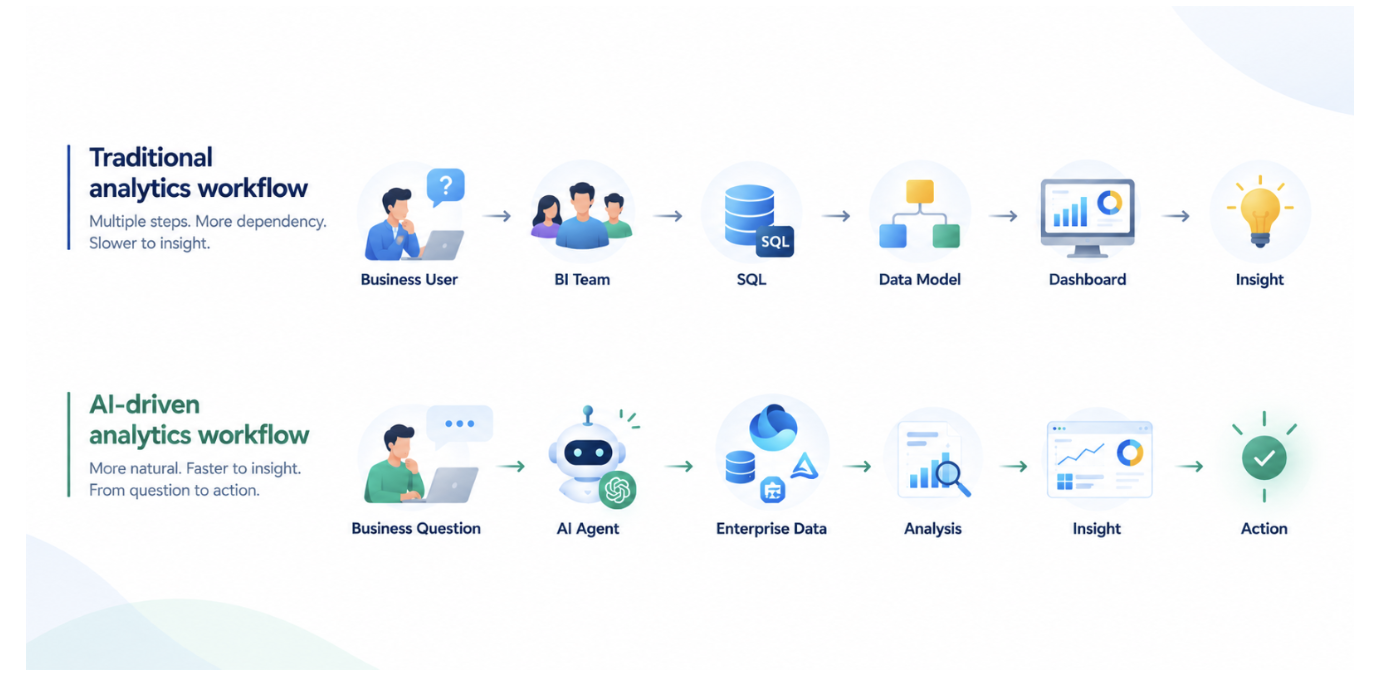
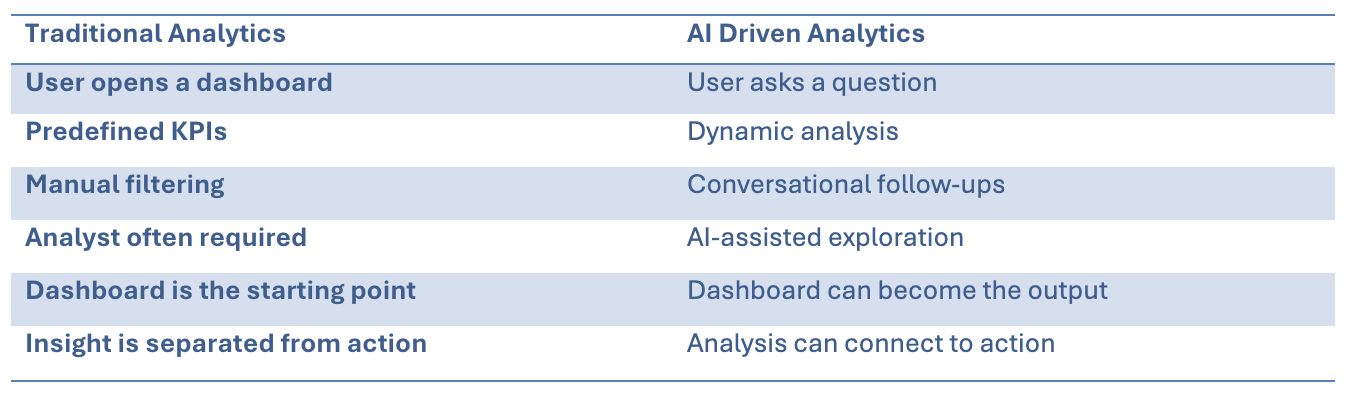
Traditional analytics often start with a dashboard or report. Users select filters and slicers, review KPIs, and ask analysts for deeper analysis when needed. The emerging workflow starts with the business question. An AI agent can then investigate the available enterprise data and present the results.
This creates a simpler path from a question to an insight. The dashboard can become an output instead of the starting point.
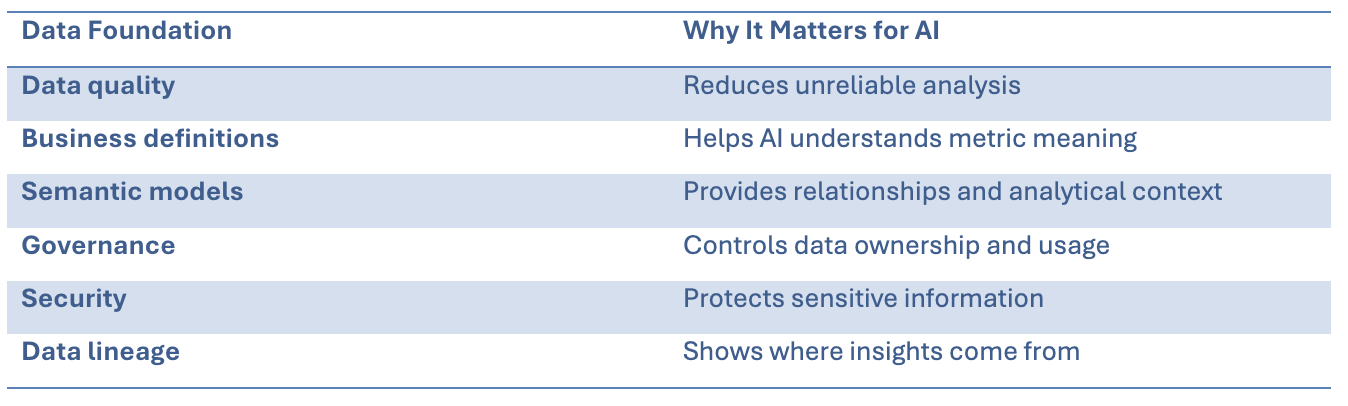
AI does not remove the need for data engineering or BI teams. Reliable AI analytics starts with reliable enterprise data.
An AI agent needs more than access to columns and tables. It needs business context, trusted metrics, relationships, calculations, and clear definitions.
Semantic layers and trusted platforms can provide that context. Examples in the source include Databricks Genie Ontology, dbt, Snowflake Horizon, and BI dashboards.
This makes the underlying data foundation even more important. The goal is no longer only to make data available. Data must also be understandable, trusted, governed, and secure.
A semantic layer gives enterprise data its business meaning. It connects relationships, measures, business logic, metric definitions, and security rules.
An AI agent should not only know that a Revenue column exists. It should understand how the organization defines revenue and which transactions belong in that metric.
It should also understand date logic and relationships with other business measures. This makes the semantic layer an important bridge between enterprise data and AI.
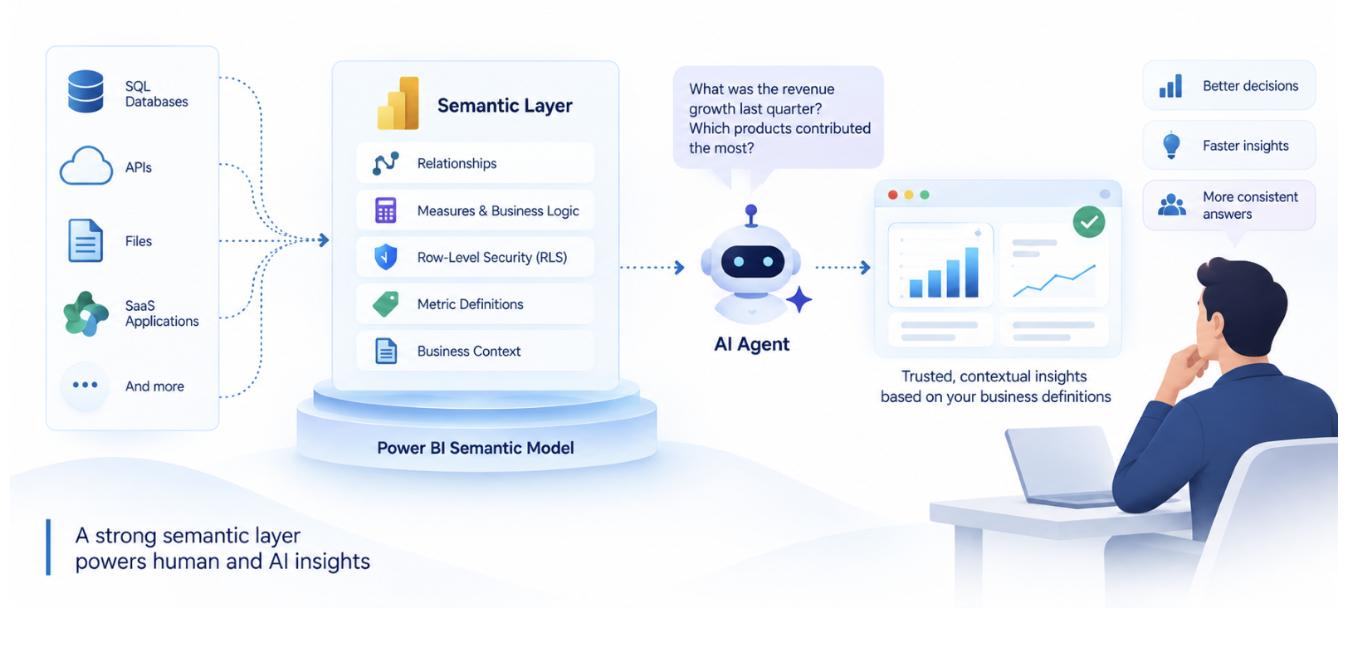
For Power BI teams, this reinforces the value of well-designed semantic models. The model becomes part of the foundation that makes conversational analytics reliable.
The rise of the Data agent does not mean traditional BI platforms disappear. It can work with platforms such as Power BI, Tableau, and other BI tools.
The role of BI teams may instead evolve. More effort can move toward trusted analytical foundations, semantic models, governance, and business definitions.
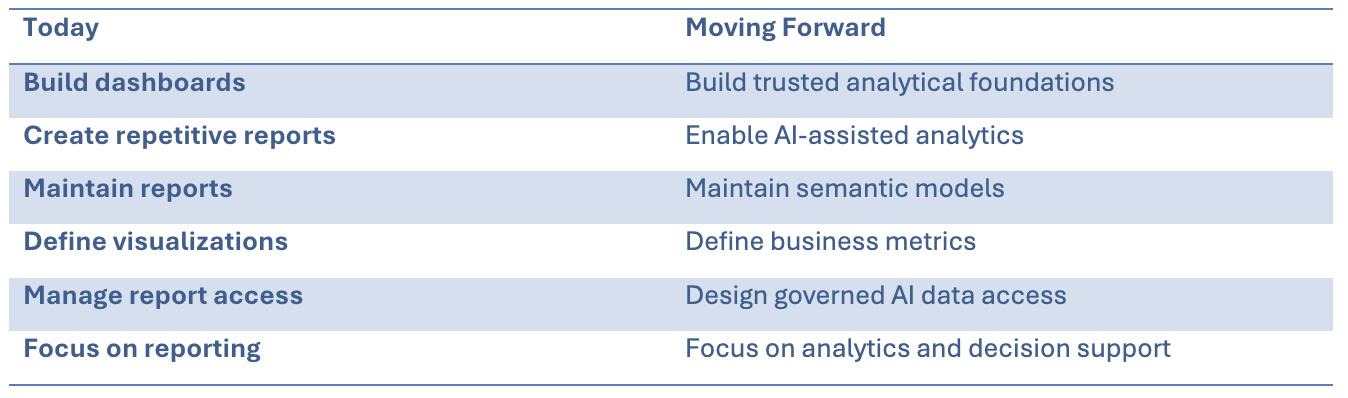
This shift makes skills such as data modeling, semantic design, governance, security, and business understanding increasingly relevant for BI professionals.
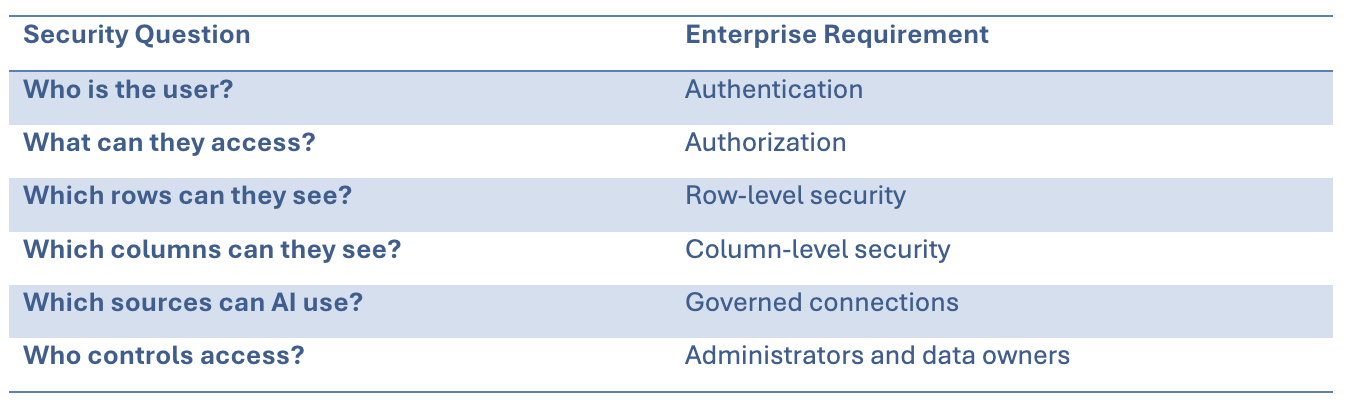
Enterprise AI cannot have unrestricted access to company data. AI access needs the same governance principles used for other enterprise applications.
The source states that administrators can control available data connections and user roles. Queries also enforce connected account permissions, including table, row, and column restrictions.
Organizations using Microsoft Fabric, Databricks, Snowflake, or other data platforms have a broader question. Can AI reliably use the data already available?
An AI-ready platform connects several layers. Each layer supports the next part of the analytics journey.
Reliable Data -> Semantic Layer -> Governance -> AI Agent -> Business Action
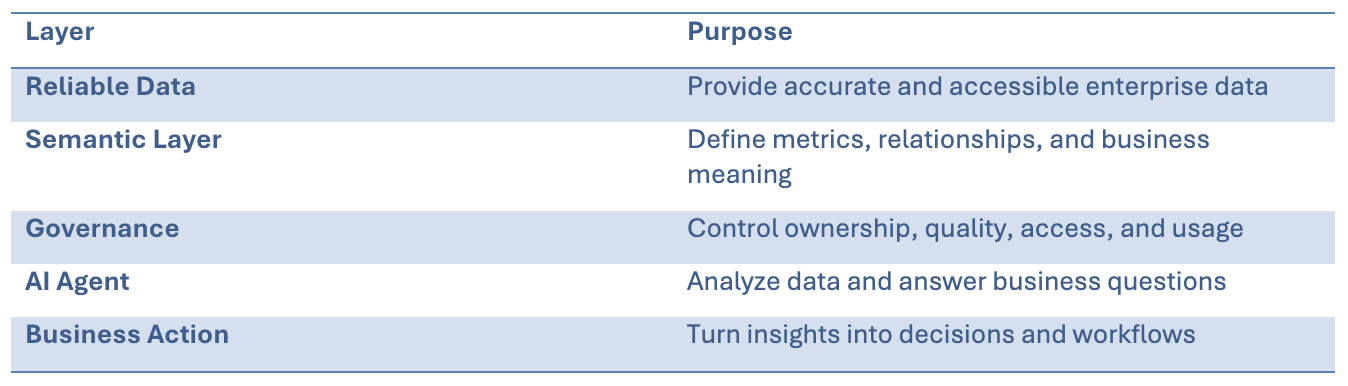
This architecture connects data engineering and analytics more closely. AI can accelerate analysis, but the foundation still determines the quality of the result.
An AI analytics initiative should not begin with a simple tool-selection question. The first step is the understanding of data foundation.
Organizations should analyze quality of data, metric definition, security, governance, and access controls. They should check and ensure that AI can reach the right information without exposing sensitive data.
Technology will continue to upgrade. Strong data architecture remains important because AI depends on the information beneath it.
For years, analytics required users to understand the reporting environment. They needed to know which dashboard to open, how to use that, which filters to select, and which visuals to review.
Conversational analytics changes that starting point. Users can begin with a business question and explore the answer through follow-up questions.
The experience looks simple on the surface. The architecture behind it is not.
A trusted answer depends on the data platform, semantic layer, security model, governance, and analytical architecture.
The bigger shift is therefore not AI-generated dashboards alone. It is the changing relationship between people and enterprise data. Users are moving from searching through dashboards toward conversational interaction with data.
At Hexaview Technologies, we think AI-driven analytics as an extension of a strong data foundation. AI function best when enterprise data is trusted, well-defined, secure, and governed.
Our focus is to connect modern data engineering, BI, semantic modeling, governance, and AI. This helps organizations build platforms that support reliable analysis and meaningful business action.
The core purpose of choosing Hexaview Technologies simple: build the foundation that makes AI useful in the enterprise. That means connecting data, business context, governance, and analytics into one practical architecture.
What is the OpenAI Data agent?
The OpenAI Data agent is an AI-powered analytics agent in ChatGPT Work. It can connect to approved company data, analyze information, answer business questions, and create interactive dashboards.
What is the ChatGPT Data agent used for?
It can help users investigate business metrics, ask follow-up questions, analyze data, and create interactive dashboards through a conversational workflow.
Can the OpenAI Data agent connect to enterprise data?
The source states that it supports approved data sources, including Databricks, Snowflake, BigQuery, Redshift, MongoDB, and others.
Can the ChatGPT Data agent work with Power BI?
Yes. The source states that the Data agent can work with Power BI, Tableau, Sigma, and ThoughtSpot.
Does the Data agent replace BI tools?
The source does not position it as a direct replacement. It can work with existing BI platforms and provide another way to explore enterprise data.
Does AI reduce the need for data engineers and BI developers?
The source describes the role as evolving rather than disappearing. Data quality, semantic models, governance, security, and business definitions remain important.
Why is the semantic layer important for AI?
A semantic layer provides business definitions, metrics, relationships, and calculations. This helps an AI agent understand enterprise data correctly.
Is enterprise data secure with the Data agent?
The source states that administrators can control data connections and user roles. Queries enforce connected account permissions, including table, row, and column restrictions.
What is an AI-ready data platform?
It combines reliable data, a semantic layer, governance, security, and AI agents. Together, these layers help turn enterprise data into useful insights.
What is the biggest takeaway from the OpenAI Data agent?
The key shift is from searching through dashboards toward conversational interaction with enterprise data. The quality of that experience still depends on the data foundation behind it.





.svg)



.svg)