

Modern businesses rely heavily on customer relationships, automation, and data driven decision making. As companies scale, managing customer interactions manually becomes inefficient and difficult. This is where Salesforce comes in. As one of the world’s leading CRM platforms, Salesforce helps businesses streamline sales, marketing, customer support, analytics, and operations from a single ecosystem.
However, implementing Salesforce successfully is not as simple as purchasing licenses and activating the platform. Every organization has unique workflows, business goals, operational challenges, and customer engagement strategies. Without proper planning and expertise, businesses often struggle with poor adoption, inefficient configurations, and delayed deployments.
This is why companies work with a Salesforce implementation partner. These certified experts help businesses deploy Salesforce strategically, customize it according to operational needs, and ensure long term success through training, integrations, and support.
Whether you are adopting Salesforce for the first time, migrating from another CRM, or expanding into advanced products like Marketing Cloud, choosing the right partner can significantly impact your ROI and business growth.
In this guide, we will explain what Salesforce implementation partner is, what they do, why businesses need them, and how to choose the right Salesforce deployment partner for long term success.
A Salesforce implementation partner is a certified consulting company or agency that helps organizations plan, deploy, customize, integrate, and optimize Salesforce solutions. Their primary goal is to ensure businesses use Salesforce effectively to improve productivity, customer engagement, and operational efficiency.
Instead of simply installing software, implementation partners build a tailored CRM ecosystem aligned with a company’s unique business objectives.
These partners often consist of:
A Salesforce implementation partner works closely with stakeholders to understand business requirements and create a roadmap for successful deployment.
Many businesses confuse Salesforce consultants with implementation partners. While both provide expertise, implementation partners typically offer end to end services through a complete team.
A consultant may focus on advisory services or a specific technical area, whereas a full Salesforce deployment partner handles:
This makes implementation partners ideal for medium to large scale Salesforce projects.
Salesforce offers multiple partnership categories based on expertise and services.
A consulting partner helps businesses align Salesforce with organizational goals and workflows. They provide strategic guidance, CRM planning, and process optimization.
A Salesforce deployment partner focuses on the technical setup and launch of Salesforce solutions. This includes system configuration, integrations, and deployment management.
A Salesforce go-live partner ensures the transition from testing to live production happens smoothly. They monitor performance, resolve issues, and support users during launch.
These partners provide ongoing maintenance, optimization, troubleshooting, and upgrades after implementation.
A salesforce marketing cloud implementation partner specializes in marketing automation, customer journeys, campaign management, email automation, and audience segmentation.
Businesses using Salesforce Marketing Cloud often require expert support because of the platform’s advanced personalization and automation capabilities.
Check the list of Top 10 Salesforce implementation Partner in 2026
Salesforce has a comprehensive Partner Program that evaluates consulting firms based on certifications, expertise, customer success, and project delivery.
Certified partners typically demonstrate:
Working with a certified Salesforce implementation partner provides businesses with greater confidence in project execution and long term support.
Understanding what is Salesforce implementation partner capabilities reveals that these firms serve as essential drivers of digital transformation. A certified Salesforce implementation partner translates complex business goals into operational reality, preventing common architectural mistakes and low user adoption.
Rather than acting as standard software installers, a true Salesforce deployment partner oversees the entire lifecycle of a deployment, managing everything from initial discovery to custom engineering.
Modern deployments rarely focus on a single cloud environment. Engaging a dedicated salesforce marketing cloud implementation partner becomes necessary when organizations require sophisticated customer journeys.
These specialized firms handle complex technical requirements unique to marketing ecosystems:
The transition to a new CRM introduces operational risks, making post-configuration support vital. A specialized Salesforce go-live partner provides real-time monitoring and technical troubleshooting during deployment to minimize business disruption.
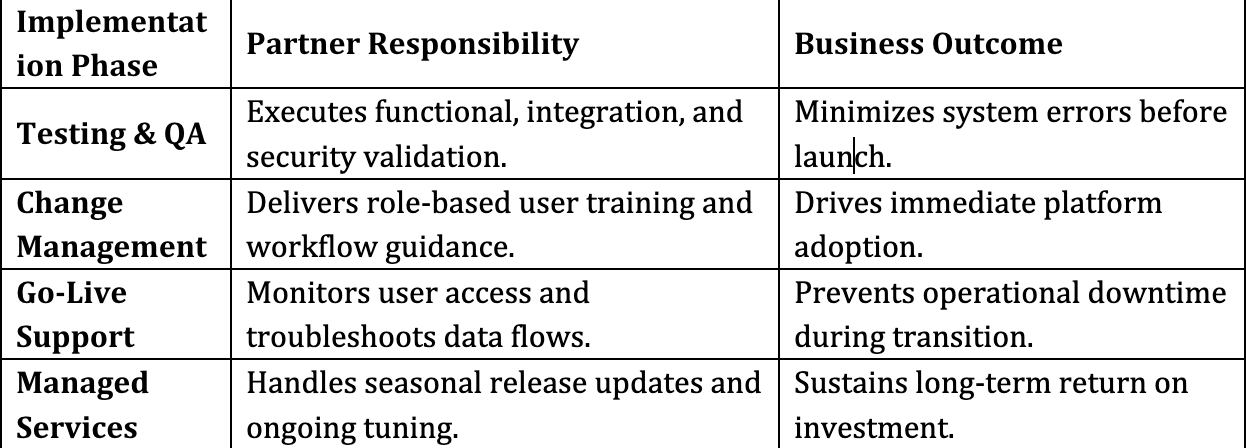
Many organizations underestimate the complexity of a CRM deployment. While the platform offers incredible flexibility, improper setup leads to data silos, fractured workflows, and wasted investments. Partnering with a certified specialist turns a complex software migration into a structured, high-ROI business transformation.
Certified experts follow proven methodologies that accelerate timelines and eliminate the costly trial-and-error approach. They manage high-risk implementation phases safely—such as data migration, API integration, and security compliance configuration. By establishing a correct technical architecture from day one, they eliminate technical debt and ensure system stability.
Modern CRM ecosystems require a diverse range of technical skills. A certified firm provides immediate access to a complete team of professionals, including:
Every business operates differently. Instead of forcing your teams to adapt to a rigid, out-of-the-box system, a partner customizes the platform to mirror your specific sales pipelines, approval processes, and compliance requirements. They design role-based dashboards and automated flows that simplify daily tasks rather than complicating them.
A CRM only delivers value if your employees actively use it. Implementation partners mitigate user resistance through structured change management and role-based training programs. They create intuitive user interfaces that encourage immediate data entry and team collaboration.
Hiring a dedicated salesforce marketing cloud implementation partner provides critical technical and strategic advantages for organizations launching complex marketing automation:
Selecting the right team requires a strategic evaluation framework that goes beyond simple cost comparisons. To secure your investment and ensure long-term scalability, evaluate potential partners across these primary operational criteria:
Because this selection shapes your entire digital infrastructure, a structured decision-making process is essential. For an in-depth framework, complete evaluation checklists, and targeted interview questions, read the comprehensive Hexaview Buyer's Guide to Choosing a Salesforce Consulting Partner to maximize your platform ROI.
A successful CRM deployment follows a structured, iterative lifecycle. Working with an expert Salesforce implementation partner ensures each phase balances technical accuracy with organizational readiness.
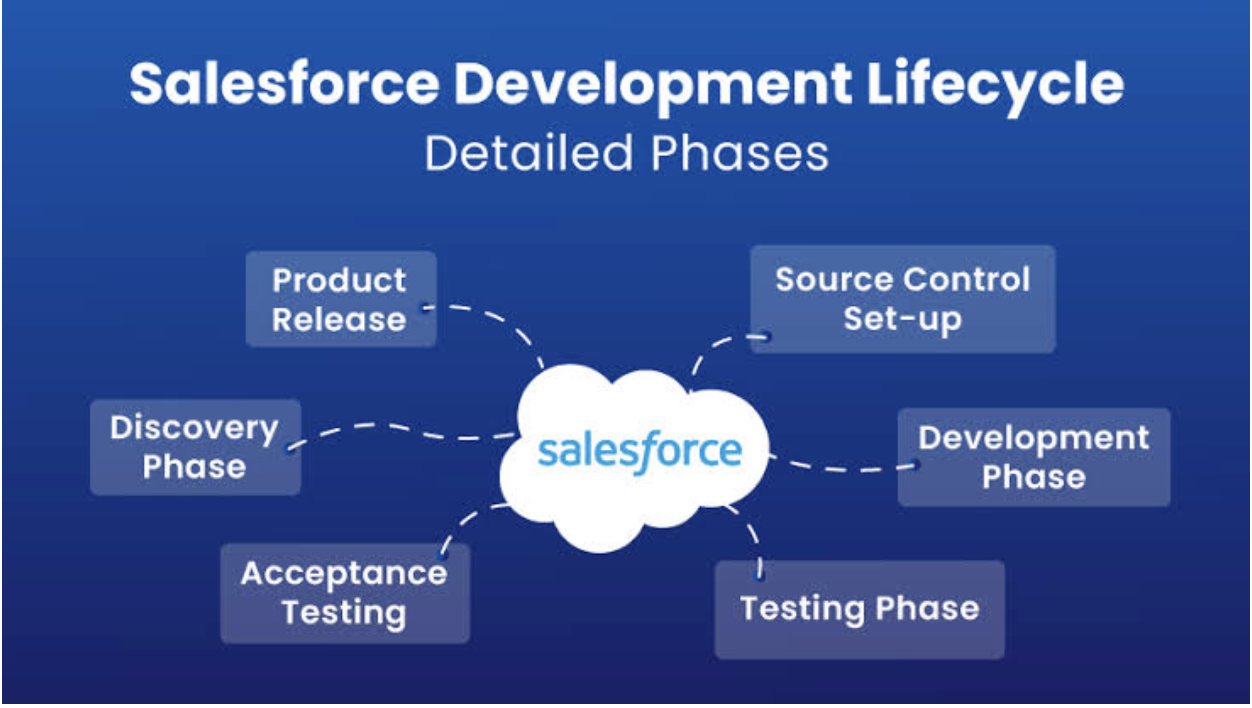
Implementing Salesforce successfully requires more than technical setup. Businesses need strategic planning, customization, user adoption, integrations, and ongoing optimization to fully benefit from the platform.
A certified Salesforce implementation partner helps organizations navigate this process efficiently while minimizing risks and maximizing ROI. From deployment and customization to training and long term support, these experts play a critical role in CRM success.
Whether you need a Salesforce deployment partner, a Salesforce go-live partner, or a specialized salesforce marketing cloud implementation partner, choosing the right provider can significantly impact business growth and operational efficiency.
As Salesforce ecosystems continue evolving, businesses that invest in the right implementation expertise will be better positioned to improve customer experiences, streamline operations, and scale effectively in competitive markets.
What is a Salesforce implementation partner?
A Salesforce implementation partner is a certified consulting company that helps businesses deploy, customize, integrate, and optimize Salesforce solutions.
Why do businesses hire a Salesforce implementation partner?
Businesses hire implementation partners to reduce deployment risks, accelerate implementation, improve customization, and maximize ROI from Salesforce investments.
What does a Salesforce deployment partner do?
A Salesforce deployment partner manages technical setup, integrations, customization, deployment, and launch activities for Salesforce environments.
What is a Salesforce go-live partner?
A Salesforce go-live partner supports businesses during the deployment phase by monitoring system performance, resolving issues, and ensuring smooth launch operations.
What is a salesforce marketing cloud implementation partner?
A salesforce marketing cloud implementation partner specializes in Marketing Cloud setup, automation, customer journeys, campaign management, and analytics optimization.
How long does Salesforce implementation take?
Implementation timelines vary depending on business size and complexity. Smaller projects may take a few weeks, while enterprise implementations can take several months.
How do I choose the right Salesforce implementation partner?
Look for certifications, industry expertise, case studies, technical capabilities, implementation methodologies, and post deployment support services.







.svg)




.svg)