
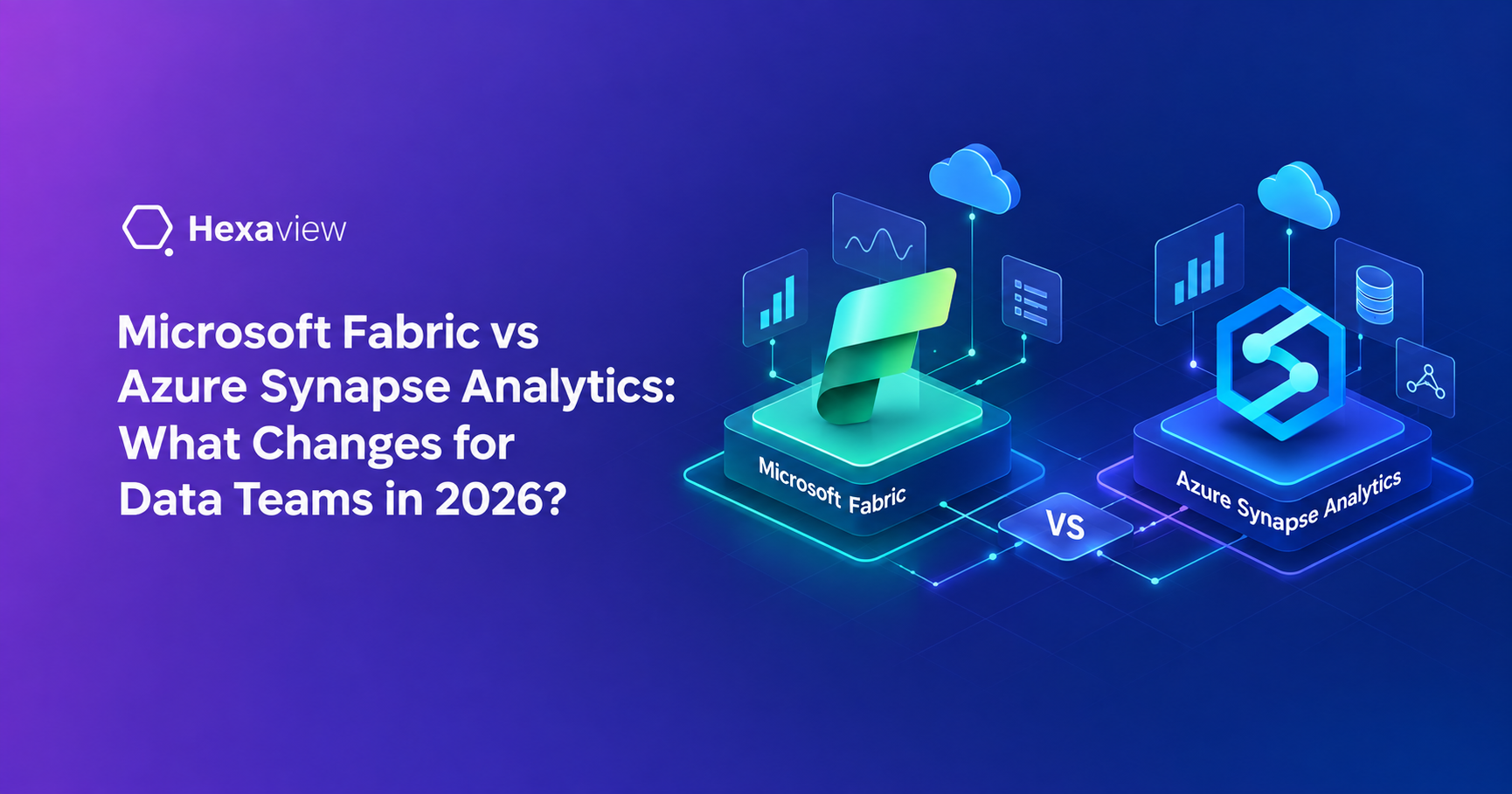
Data leaders often frame technology upgrades around a simple question: "Which platform has better features?" When comparing Microsoft Fabric vs Azure Synapse, that question misses the bigger picture. The real shift happens in your daily operations. When an organization transitions from an Azure Synapse environment to Microsoft Fabric, what actually changes for its data teams?
Is Microsoft Fabric replacing Azure Synapse? Microsoft Fabric is not shutting down Azure Synapse immediately, but it is Microsoft's primary platform for future innovation. Azure Synapse remains a stable platform, but new features focus on Fabric. Therefore, Azure Synapse to Microsoft Fabric transitions are a natural evolution for modern analytics.
Azure Synapse handles enterprise analytics well. However, Microsoft Fabric takes a broader approach by unifying data engineering, integration, warehousing, analytics, data science, real-time intelligence, and Power BI into one SaaS ecosystem.
This Fabric vs Synapse decision goes far beyond a simple feature matrix. It reshapes your architecture, compute usage, team workflows, costs, and governance model. Data leaders must treat a Synapse migration as an operational strategy, not just a technical swap.
The core distinction between these platforms lies in their fundamental architecture. Azure Synapse operates as a collection of powerful, connected Azure PaaS analytics services. Microsoft Fabric unifies those capabilities into a single, cohesive SaaS ecosystem.
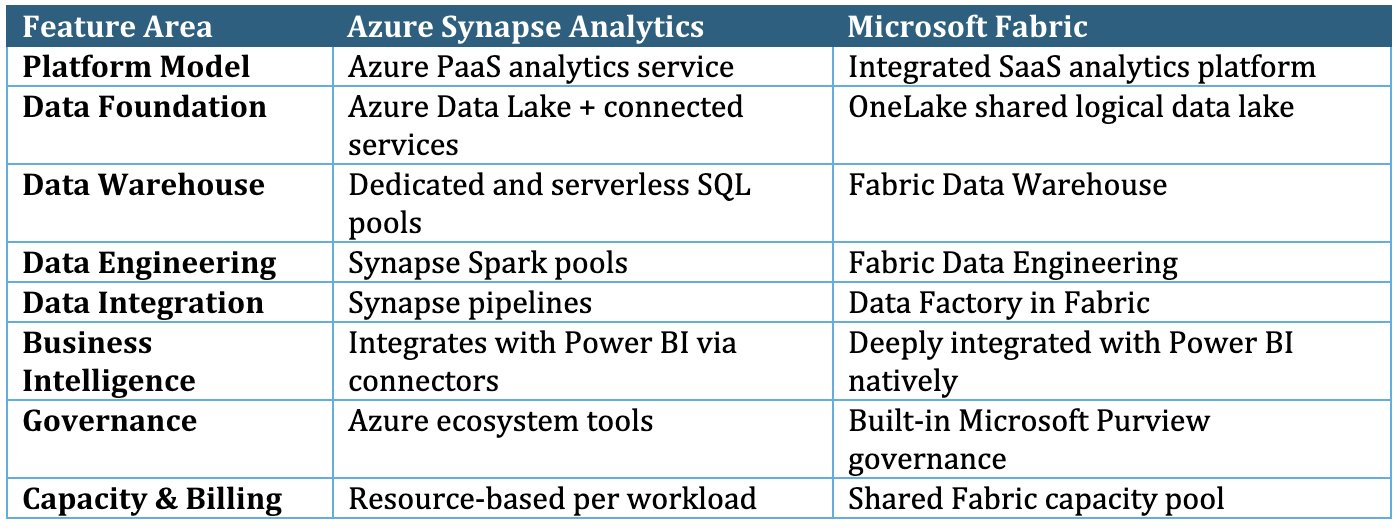
Architecturally, Synapse requires manual integration across individual Azure resources. Fabric replaces that friction with a unified, SaaS-driven operational environment where workloads share the same data and compute pool seamlessly. Neither platform wins automatically; the right choice depends entirely on your team's operational needs and governance goals.
Moving from Synapse to Fabric impacts daily engineering operations. Here are six major changes teams experience.
Fabric replaces disconnected storage accounts with OneLake, a tenant-wide logical data lake. It natively supports both Lakehouse and Warehouse engines over Delta Parquet files. Data engineers no longer copy files across regional stores. Shortcuts let you reference external lakes without moving bytes, which reduces duplication and lowers storage costs.
Consequently, architects can design simplified medallion architectures with far fewer pipeline hops. This architectural shift represents a fundamental change when evaluating Microsoft Fabric vs Azure Synapse.
Synapse forces teams to size separate Dedicated SQL pools and Spark clusters. In contrast, Fabric uses a shared Capacity SKU model. All workloads draw compute from one tenant or workspace pool. While this model simplifies FinOps, it requires active capacity monitoring.
Heavy batch runs can trigger throttling and impact interactive queries. Managing the Fabric vs Synapse transition requires adopting capacity management practices instead of provisioning individual nodes.
Migrating notebooks involves more than simple file copying. Fabric Spark uses updated runtime environments, new library management methods, and different session configurations.
Features like .NET for Spark or external Hive metastores lack native support in Fabric. Teams executing a Synapse migration must refactor custom scripts, adjust job schedules, and retrain engineers to work with Fabric environments.
Data Factory in Fabric handles data integration natively. However, existing Synapse pipelines rarely translate one-to-one. Connection string handling, activity execution limits, and custom script dependencies vary between platforms.
Engineering teams must audit legacy pipelines before starting a Synapse to Fabric migration to identify obsolete stages, remove unnecessary data staging steps, and rebuild orchestration logic.
In Synapse, data pipelines push processed data to external BI workspaces through scheduled refreshes. Fabric removes this boundary by connecting Lakehouses directly to Power BI via Direct Lake mode.
Reports query Delta tables natively without loading duplicate memory models. Engineers, report authors, and business analysts work in shared workspaces, reducing handoffs and accelerating semantic layer updates.
Migrating security settings requires remapping your administrative controls rather than copying Synapse role assignments directly. Fabric manages access through workspace roles, Microsoft Purview item labels, and OneLake data security controls.
Teams must rebuild network boundary configurations, identity mapping, and row-level security rules to fit Fabric's tenant-level architecture.
Choosing between these platforms requires evaluating your current workloads and strategic goals. Neither platform fits every scenario, so data leaders must match their choices to organizational maturity.
Platform selection depends on workload alignment, operational readiness, and strategic timing rather than chasing new tools.
Migrating makes financial sense when organizations aim to modernize analytics platforms, consolidate fragmented toolsets, and adopt OneLake. By shifting to Fabric, data engineering teams improve collaboration with Power BI users while drastically simplifying enterprise data architecture.
A successful Synapse to Fabric migration requires architectural transformation, not a simple lift-and-shift script. Data leaders generally choose from three strategic migration paths:
Evaluating workload readiness before choosing an execution path protects business continuity.
Migrating to a unified analytics platform requires strategic execution. Hexaview works with global organizations as a Microsoft Fabric migration partner to deliver seamless platform transitions without business interruption.
1. Unified Analytics for Wealth & Investment Management
A successful transition requires a structured framework to minimize technical debt and protect business operations.
Inventory existing SQL pools, Spark jobs, pipelines, notebooks, connections, security rules, and downstream data dependencies.
Determine which legacy assets require direct migration, code refactoring, complete redesign, or immediate retirement.
Define your target Fabric architecture, including OneLake structure, Lakehouse or Warehouse items, workspace roles, Capacity SKUs, and Purview governance settings.
Transfer compatible data objects, refactor legacy scripts, update custom libraries, rebuild integration pipelines, and reconfigure source connections.
Run parallel testing across both platforms to verify data accuracy, system performance, security boundaries, reporting models, and lineage before executing a controlled production cutover.
Navigating a platform transition requires balancing technical agility with operational continuity. As a trusted Microsoft Fabric consultation, Microsoft Fabric implementation, and migration partner, Hexaview guides organizations through every phase of their data evolution.
Hexaview helps organizations evaluate what to migrate, what to modernize, and what to retain for maximum business value.
Do not execute a Synapse migration simply because Microsoft Fabric is the newer platform. Migrate when Fabric delivers a tangible technical advantage, operational efficiency, or financial benefit to your enterprise.
To ensure project success, data leaders should:
If your organization plans to evaluate Microsoft Fabric vs Azure Synapse, Hexaview provides expert Microsoft Fabric consultation to assess your environment, design target architectures, and execute a structured roadmap.
Talk To Experts for Better Understanding
Is Microsoft Fabric replacing Azure Synapse?
Directly speaking, Microsoft has no immediate plans to shut down Azure Synapse Analytics. Fabric represents Microsoft's strategic direction for future analytics innovation and features, but existing Synapse environments remain fully supported. Organizations do not need to replace their stable platforms instantly.
Is Microsoft Fabric better than Azure Synapse?
Not universally. Fabric provides a unified SaaS platform that excels in Power BI integration and cross-team collaboration. However, Synapse remains a reliable choice for mature, highly customized PaaS environments that deliver strong value without immediate migration requirements.
Can Azure Synapse be migrated to Microsoft Fabric?
Yes. Workloads can be migrated, but transition paths vary by service. SQL pools, Spark notebooks, and data integration pipelines require tailored approaches ranging from automated conversion tools to active code refactoring.
How difficult is Synapse migration to Fabric?
Migration complexity depends on overall data volume, custom code structures, pipeline dependencies, and security models. Simple workloads move quickly using built-in migration tools, while highly customized architectures require refactoring and testing.
Do I need Microsoft Fabric consultation before migrating from Synapse?
Partnering for an initial assessment helps identify compatibility gaps, prioritize workloads, and estimate costs. Strategic consultation ensures you modernize architecture intentionally rather than simply replicating legacy Synapse setups inside Fabric.







.svg)



.svg)